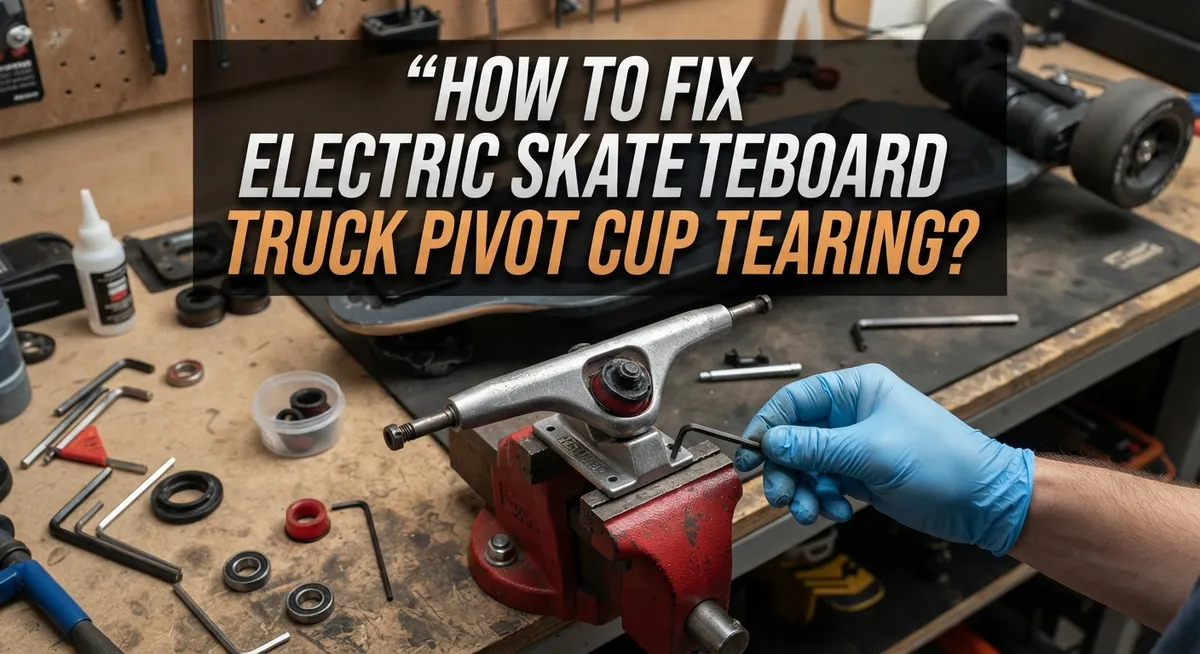
How To Fix Electric Skateboard Truck Pivot Cup Tearing?
Your electric skateboard feels wobbly. Turns don’t feel smooth anymore. You hear a strange knocking noise from the trucks.
Chances are, your pivot cup is torn. This small part plays a big role in how your board rides.
Pivot cups sit between the truck baseplate and the hanger. They cushion your turns and absorb pressure. Over time, they wear out and tear from regular use.
The good news? You can fix this problem yourself. You don’t need to be a skate shop expert to handle this repair.
In a Nutshell
- Pry gently with a screwdriver to remove the torn pivot cup from the baseplate. Keep pressure even all around.
- Uneven force damages the baseplate. This is the most common mistake riders make during removal.
- Pivot cups don’t last forever. Some wear out in as little as 12 to 200 miles, depending on use.
- Lack of lubrication is the main reason cups tear early. Dry cups create more friction and wear faster.
- Add one drop of bearing lube to the new cup before installing it. This keeps things smooth.
- After lubing, rock the trucks side to side. This spreads the lube evenly across the cup surface.
- Regular maintenance stops future tearing. A quick check every few rides can save you a full replacement later.
- You only need a few tools for this job: a skate tool, a screwdriver, and some bearing lube.
What Is a Pivot Cup and Why Does It Tear?
A pivot cup is a small rubber or plastic component that sits between your truck’s baseplate and hanger. This piece allows your trucks to turn smoothly when you lean into corners or make adjustments while riding.
Think of the pivot cup as a cushion. It absorbs shock and enables rotational movement. Without it, your trucks would feel stiff and unresponsive. The hanger pivots around this cup, which is why it’s called a pivot cup.
Why does it tear? The main culprit is insufficient lubrication. When your pivot cup dries out, friction increases dramatically. This friction causes the rubber or plastic to crack and eventually tear apart. Riding without proper maintenance speeds up this process significantly.
Some pivot cups fail within just 12 to 200 miles of riding. This rapid wear happens because riders forget to add bearing lube to the cup. Dust and dirt also accumulate in the cup over time, grinding away at the material.
What happens when it tears? Your board develops a wobbly, unstable feeling. The trucks become loose and uncontrollable. You might hear creaking sounds when you turn. Riding becomes unsafe because you lose precise steering control.
The good news is that pivot cups are replaceable parts. You don’t need professional help or expensive repairs. Regular maintenance prevents premature tearing. A single drop of bearing lube applied periodically keeps your pivot cup healthy for much longer.
Understanding how pivot cups work helps you prevent damage. Keep your cups lubricated, and they’ll last significantly longer. This simple maintenance task takes just a few minutes and saves you money on replacements.
Signs Your Pivot Cup Needs Replacing
Your pivot cup sends you clear warning signs before it completely fails. Learning to spot these signals helps you fix the problem before your board becomes unsafe to ride.
Visible cracks or splits in the rubber material are the most obvious indicator. Open your skateboard and inspect the pivot cup closely. If you see deep tears or chunks missing, replacement is definitely needed.
A wobbly or loose feeling when you stand on your board is another key sign. Your truck will feel unstable side to side. You might notice this sensation most when turning or carving. The board won’t respond smoothly to your weight shifts like it normally does.
Grinding or clicking sounds from your trucks mean trouble. These noises happen when the damaged cup allows excessive movement. The hanger rubs against the baseplate instead of rolling smoothly. Pay attention to any unusual sounds during your rides.
Check for excessive play in the hanger. Grab your skateboard and hold it in your hands. Gently move the hanger back and forth. If it moves too much without resistance, your pivot cup is likely torn or severely worn.
Uneven wear patterns on your wheels suggest pivot cup damage. A damaged cup causes your truck to angle incorrectly. This leads to one side of your wheel wearing faster than the other.
Difficulty turning smoothly is another warning sign. Your board might feel stiff or require extra effort to carve. Turns won’t feel natural or responsive anymore.
Don’t ignore these signs. A torn pivot cup only gets worse with riding. Catching the problem early prevents damage to other truck components and keeps your electric skateboard safe and fun to ride.
Tools You’ll Need Before You Start
Before you start fixing your electric skateboard truck pivot cup, gather the right equipment. Having everything ready makes the job faster and prevents frustration.
A skate tool is your first essential item. This multi-purpose tool has a screwdriver head that works perfectly for prying out the old pivot cup. The flat edge gives you control and helps you apply even pressure around the cup.
You’ll also need a regular screwdriver as a backup option. Choose one with a flat head that fits snugly into the pivot cup groove. This ensures you won’t slip and accidentally damage your truck baseplate during removal.
Bearing lube is absolutely necessary for this repair. You only need a small amount, but don’t skip it. Quality bearing lube keeps your new pivot cup from wearing out too quickly.
Have a clean cloth or rag nearby to wipe away old debris and dust. This step matters more than people realize. Dirt particles can interfere with your new cup’s performance and cause premature wear.
Consider keeping a small container to hold screws and small parts while you work. This prevents losing components on your workbench or floor.
A replacement pivot cup is obviously essential. Make sure you have the correct size for your specific truck model before starting. Different boards use different cup sizes.
Finally, work on a flat, clean surface with good lighting. A workbench or table gives you space to organize your tools and parts.
Having these items prepared means you can focus on the actual repair without stopping midway to hunt for missing tools. This setup takes five minutes but saves significant time during the actual work.
Step-by-Step: Removing the Torn Pivot Cup
Now that you have your tools ready, it’s time to remove the damaged pivot cup. This step requires care and patience to avoid harming your truck’s baseplate.
Start by positioning your skateboard securely. Place it on a flat work surface where it won’t roll or shift. You want both hands free to work safely. Flip the board upside down so the trucks face up. This gives you clear access to the pivot cup area.
Locate the pivot cup on the truck’s baseplate. It sits in the center where the hanger connects. You’ll see a small rubber or plastic cup recessed into the metal. This is what you need to remove.
Take your screwdriver and insert the tip gently into the edge of the pivot cup. Don’t force it. Apply steady, even pressure around the cup’s perimeter. Work your way around slowly, lifting a little bit at each point. This balanced approach prevents you from damaging the baseplate.
Uneven pressure is the biggest mistake people make here. If you pry too hard on one side, you’ll bend or crack the baseplate. That creates a much bigger problem than a torn pivot cup.
As the cup loosens, continue applying gentle pressure until it comes free. You may hear a small pop as it releases. Once removed, set it aside and inspect the baseplate for any damage. Look for cracks, dents, or bent areas.
Wipe away any dirt or old rubber debris from the baseplate with your cloth. A clean surface helps your new pivot cup sit properly. You’re now ready to install the replacement and get back to riding.
Step-by-Step: Installing and Lubricating the New Pivot Cup
Now that your torn pivot cup is out, you’re ready to install the new one and get your board rolling smoothly again. This part is straightforward if you follow the right steps.
Start by examining your new pivot cup before installation. Check that it’s the correct size and shape for your truck model. Look at the old cup you removed to compare. Make sure the new cup has no defects or damage from packaging.
Clean the pivot cup cavity on your baseplate thoroughly. Use a clean cloth to wipe away any dirt, dust, or old rubber debris. A clean surface helps the new cup sit properly and function better. Take your time with this step because residue affects how well the cup performs.
Position the new pivot cup into the baseplate cavity. Press it down gently but firmly until it sits flush with the surface. The cup should feel secure and level. It shouldn’t rock or shift when you press on it.
Now apply lubrication to your newly installed pivot cup. Use just one small drop of bearing lube on the cup. More lubricant doesn’t mean better performance. Too much grease attracts dirt and causes faster wear.
Rock your trucks side to side gently to distribute the lubricant evenly. Do this for about 30 seconds. You’ll feel the turning action become smoother as the lube spreads throughout the cup. This distribution step is crucial for proper function.
Let the lubricant settle for a few minutes before riding. Your pivot cup is now ready for action. Regular lubrication every few weeks keeps your new cup in top shape and prevents premature tearing.
Common Mistakes That Cause Premature Tearing
Pivot cups tear prematurely when riders skip basic maintenance steps. The most common mistake is not lubricating your pivot cup regularly. Without bearing lube, friction builds up and causes rapid deterioration. Some cups fail within just 12 to 200 miles if you ignore this simple task.
Uneven prying pressure damages your truck baseplate when removing old cups. Many people push too hard on one side instead of applying gentle, even force around the entire cup. This bending or cracking of the baseplate creates bigger problems than the original tear.
Riding with a loose pivot cup accelerates wear significantly. When the cup moves around instead of staying snug, it rocks back and forth constantly. This movement grinds the cup material away much faster than normal use would.
Ignoring warning signs leads to complete failure. If your trucks feel sloppy or make clicking sounds, your pivot cup is already damaged. Waiting to fix this problem only makes the damage spread to surrounding parts.
Improper installation of replacement cups causes early tearing too. If you don’t seat the new cup fully into the cavity, it won’t function correctly. The cup needs to sit flush and secure for proper performance.
Mixing old and new components creates misalignment issues. If your baseplate is already damaged from previous mistakes, a new pivot cup won’t last long. Sometimes you need to address the baseplate condition first.
Neglecting to clean the pivot cup cavity before installing a new cup traps dirt and debris inside. This grit acts like sandpaper against your new cup. Always wipe the cavity clean with a cloth before installation.
Maintenance Tips to Extend Pivot Cup Lifespan
Your pivot cup lifespan depends heavily on how you maintain it after installation. Regular lubrication is the single most effective way to prevent premature tearing. Apply just one drop of bearing lube to your pivot cup every few weeks, depending on how often you ride.
Rock your trucks side to side gently after adding lubricant. This spreads the oil evenly throughout the cup and ensures all moving parts stay protected. The lubricant reduces friction between your hanger and baseplate, which is what causes most wear and tear.
Check your pivot cup condition monthly. Look for visible cracks, splits, or unusual wear patterns. Catching damage early means you can replace the cup before it fails completely while riding.
Keep your skateboard clean and dry when not in use. Moisture and dirt get trapped inside the pivot cup cavity and accelerate deterioration. Wipe down your trucks after riding in wet conditions.
Avoid riding with a loose pivot cup. If you notice your trucks feel wobbly or unstable, stop and inspect immediately. A loose cup bounces and shifts constantly, which tears the material much faster.
Store your board indoors in a cool, dry place. Extreme temperature changes and prolonged sun exposure can degrade rubber and plastic components over time.
Rotate your trucks periodically if possible. If your board has removable trucks, switching them front to back distributes wear more evenly across all four cups.
Follow a consistent maintenance schedule. Set reminders every two to three weeks to check lubrication levels and inspect for damage. This simple habit prevents most pivot cup problems before they become serious issues that force you off the board.
Troubleshooting Persistent Pivot Cup Problems
When your pivot cup keeps tearing despite your best efforts, you need to dig deeper into what’s causing the problem. Persistent tearing usually signals that something else is wrong beyond just normal wear and tear.
The most common culprit is insufficient lubrication. Your pivot cup needs regular oil to stay healthy. Without it, friction builds up and causes the material to break down faster. Check if you’re applying bearing lube consistently. One drop every few weeks makes a huge difference in how long your cup lasts.
Another issue is riding with loose trucks. When your pivot cup isn’t seated properly, it moves around under your weight. This constant shifting creates stress on the material and causes tears to develop quickly. Always ensure your pivot cup sits firmly in the baseplate cavity.
Dirt and debris trapped inside the cavity also cause problems. When you install a new cup, the old dirt remains underneath. This creates uneven pressure points that lead to premature tearing. Clean the cavity thoroughly before each new installation.
Pay attention to your riding style too. Aggressive tricks and hard landings put extra stress on your trucks. If you’re doing lots of jumps and impacts, your pivot cups will wear faster than casual riders experience.
Finally, check if you’re using the right cup type for your truck model. Mismatched components don’t fit properly and create gaps. These gaps allow the cup to shift and tear under pressure.
If tearing continues after addressing these issues, your truck baseplate itself might be damaged. Inspect it closely for cracks or deformation. A damaged baseplate prevents any pivot cup from lasting long.
Final Thoughts
Fixing a torn pivot cup does not need to be complicated. With the right tools and a little patience, you can replace it yourself at home.
Removal is the first step. Use a screwdriver to gently pry out the old cup. Apply even pressure so you do not damage the baseplate.
Once removed, clean the cavity fully. This step matters more than most riders realize. A clean cavity helps the new cup sit properly.
Installing the new cup takes care and attention. Push it in evenly so it seats correctly. A crooked cup wears out faster than a properly installed one.
Lubrication makes a big difference. Add one drop of bearing lube to the new cup before you finish. This small step protects your cup from early tearing.
Rock the trucks side to side after lubricating. This spreads the lubricant evenly across the cup surface.
Regular maintenance keeps your pivot cup healthy long term. Riders who skip lubrication often see cups fail within just 12 to 200 miles.
Fixing tearing issues comes down to three things. Proper removal, careful installation, and consistent lubrication. Skip any one of these steps and problems tend to return quickly.
If you notice repeated tearing even after doing everything right, something else might be wrong. Your baseplate could be worn or damaged. In that case, replacing the entire truck may be your best option.
Pivot cup care is simple once you understand it. Keep your tools handy, check your cups often, and lubricate regularly. Your electric skateboard will reward you with smoother rides and fewer surprise repairs down the road.
Frequently Asked Questions
How often should I replace my pivot cup?
Pivot cups wear at different rates depending on your riding habits and maintenance. Most riders see their cups last anywhere from 12 to 200 miles before needing replacement. The big difference comes down to lubrication. If you skip maintenance, your cup deteriorates much faster.
Check your pivot cup monthly. Look for visible cracks, splits, or unusual wear patterns. When you spot damage, it’s time to replace it.
Why does my pivot cup tear so quickly?
Insufficient lubrication is the main reason pivot cups fail prematurely. Your cup needs regular attention to stay healthy.
Riding with loose trucks also accelerates wear and tear. Dirt and debris trapped inside the cavity cause extra friction. Your riding style matters too. Aggressive tricks and hard landings put extra stress on your trucks.
Make sure you’re using the correct cup type for your truck model. Using the wrong size creates gaps that lead to damage.
What tools do I actually need to fix a torn pivot cup?
You need just three basic items. A skate tool handles most work. A screwdriver helps you gently pry out the old cup without damaging your baseplate.
Bearing lube is essential for the final step. One drop is all you need to keep your new cup running smoothly.
Can I prevent pivot cup tearing altogether?
You can’t eliminate wear completely, but you can slow it down significantly. Apply one drop of bearing lube to your pivot cup regularly. Rock your trucks side to side to distribute the lubricant evenly.
Store your board indoors in a cool, dry place when not riding. Keep your skateboard clean and dry. These simple habits extend your cup’s lifespan considerably.

Hi, I’m Lola Griffin 👩💻, the voice and creator behind ResizerBox. I’m a passionate tech enthusiast who loves exploring the latest gadgets, smart devices, and trending Amazon electronics. Through my reviews, I share honest insights, real-world testing experiences, and practical buying advice to help readers make confident tech choices.