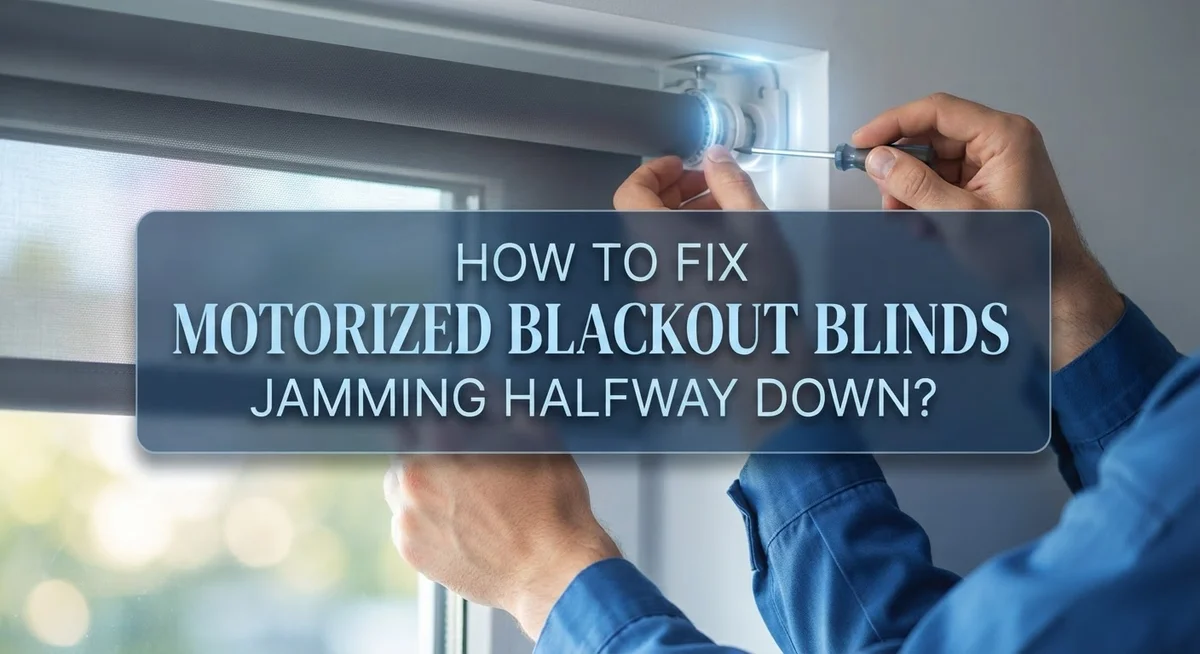
How To Fix Motorized Blackout Blinds Jamming Halfway Down?
Your motorized blackout blinds stop halfway down, and now you’re stuck with a room half lit and a remote that won’t help. It’s frustrating, especially when you need darkness fast for a nap, a movie, or bedtime.
The good news? This problem is common and usually easy to fix. Most jams happen because of dirt in the track, bent slats, or a loose bracket. Sometimes the motor simply loses connection with the shade mechanism.
This guide walks you through every step to diagnose and solve the issue. You’ll learn how to check the flat pin side first, since jams often start there. We’ll show you how to inspect for bent slats, clean the track properly, and tighten mounting brackets.
In a Nutshell
- Start with the flat pin side. Most jams begin here, so check this spot first before looking elsewhere.
- Look for bent slats or debris. Dirt buildup and warped materials often create friction that stops your blinds midway.
- Clean the track thoroughly. Wipe away dust and grime, then cycle your blinds up and down to test movement.
- Tighten loose mounting brackets. A shaky bracket can throw off alignment and cause your blinds to jam.
- Try the hand-roll method. This resets internal tension safely without damaging the motor or mechanism.
- Never force stuck blinds. Yanking cords or pulling motorized shades manually can disconnect the motor completely.
- Skip oil-based lubricants. These attract dust and hair, making the problem worse over time.
- Check smart blind settings too. Battery level, app limits, and rail obstructions matter just as much as mechanical issues.
- Diagnose before ordering parts. Find the root cause first, so you don’t waste money on unnecessary replacements.
Why Motorized Blackout Blinds Jam Halfway Down
Motorized blackout blinds jam halfway down because friction stops the motor from completing its cycle. This friction builds up from several sources working alone or together.
Dirt and debris accumulate inside the track over time. Dust particles, pet hair, and small particles create resistance. When the motor tries to push the shade down, it encounters this buildup and stalls midway.
Bent slats or warped materials also cause jams. If one slat bends inward, it catches on the track. The shade can’t move past that point without force. Warping happens from heat, humidity, or impact damage.
Loose mounting brackets throw the entire system out of alignment. When brackets aren’t tight, the track shifts slightly. This misalignment creates uneven pressure on the shade as it moves. The motor struggles more on one side than the other.
Motor disconnection is another culprit. The motor shaft can slip off the shade mechanism. When this happens, the motor spins but nothing moves. The shade stays stuck wherever it stopped.
Worn gears or internal obstructions inside the motor reduce its power. Gears wear down from regular use. Debris sometimes enters the motor housing and blocks movement.
Misaligned tracks prevent smooth operation. If the track bends or shifts, the shade binds at that spot. Movement becomes impossible without addressing the alignment issue.
The flat pin side is where most jams originate. This side bears more stress during operation. Check this area first when troubleshooting.
Understanding these causes helps you diagnose your specific problem. Once you know why your blinds jam, fixing them becomes straightforward.
Tools and Safety Precautions Before You Start
Before you start fixing your motorized blackout blinds, gather the right tools and follow basic safety steps. This protects both you and your blinds from damage.
Essential tools you’ll need:
A soft cloth or microfiber towel helps you wipe away dust and debris from the track. A small brush or old toothbrush cleans hard to reach spots inside the mechanism. A screwdriver set (both Phillips and flathead) lets you tighten mounting brackets and access the motor if needed. A step ladder or stool gives you safe access to your blinds without stretching or straining.
For smart blinds, keep your remote and smartphone nearby. You may need to check battery levels or app settings during diagnosis.
Safety precautions to follow:
Always turn off power to motorized blinds before opening any panels or accessing internal parts. Unplug the unit from the wall outlet if possible. This prevents electric shock and accidental motor activation while you work.
Never yank or force stuck blinds. Forcing them can disconnect the motor from the shade mechanism and cause permanent damage.
Avoid oil based lubricants on the track. These attract dust and hair, making jams worse over time. Use only dry lubricants or compressed air instead.
Work in good lighting. Position yourself where you can clearly see the track, slats, and mounting brackets. Poor visibility leads to missed problems and mistakes.
Take your time. Rushing through diagnosis causes you to overlook simple fixes. A slow, careful approach identifies the real cause faster than hurrying through steps.
Step-by-Step: Diagnosing the Flat Pin Side and Track
Start by examining the flat pin side of your motorized blackout blinds. This is where most jams happen because the pin connects the shade to the motor mechanism. Look closely at this connection point for any visible damage or misalignment.
Next, inspect the track itself. Run your fingers along the entire length to feel for bumps, dents, or debris. Dirt accumulates easily in tracks and creates friction that stops the blinds midway. Pay special attention to corners and crevices where dust likes to hide.
Check if any slats appear bent or warped. Even one twisted slat can catch on the track and jam the entire system. Gently press on the slats to see if they move freely or feel stuck in certain spots.
Look at the mounting brackets holding your blinds to the wall or window frame. Wiggle them gently to see if they’re loose. A shaky bracket throws off the track alignment and causes jams.
Examine the motor housing for any obvious obstructions. Look for loose debris, tangled cords, or anything blocking the gears. If you see internal damage like cracked gears, you’ll likely need replacement parts.
Finally, verify that the track runs straight and parallel. A misaligned track prevents smooth operation. Stand back and sight along the entire track length to spot any bends or twists.
Once you’ve completed this inspection, you’ll know exactly where the problem originates. This diagnosis helps you decide whether you need cleaning, adjustment, or part replacement. Document what you find with photos so you remember the details later.
Step-by-Step: Cleaning, Realigning, and Resetting Tension
Start by turning off power to your motorized blackout blinds. This keeps you safe while you work on the mechanism.
Clean the track thoroughly. Use a soft cloth to wipe away dust, dirt, and debris inside the track. Gently run your cloth along the entire length where the blinds move. Pay special attention to corners and crevices where buildup collects.
Next, cycle the blinds manually if possible. If your blinds have a manual override, gently move them up and down several times. This helps loosen trapped debris and resets the internal tension without forcing the motor.
Check that all mounting brackets are tight. Use the appropriate tool to tighten any loose screws you find. Loose brackets cause misalignment, which creates friction and jamming.
Inspect the track for bends or warping. Run your hand along it to feel for irregularities. If you spot a bent section, you may need to carefully straighten it or order a replacement track.
Reset the tension using the hand roll method if your blinds have this feature. Consult your manual for the exact steps, as this varies by model. This safely restores proper tension without damaging the motor.
For smart blinds, verify that battery levels are adequate and limit settings are correct. Check your app to confirm no obstructions are programmed into the system.
If cleaning and realigning don’t solve the problem, the motor itself may have internal damage. At this point, consider removing the motor unit to inspect gears for wear or obstructions. You might need replacement parts to restore full function.
Fixing Motor and Gear-Related Jams
When your motorized blackout blinds jam halfway down, the motor and gear system often causes the problem. Let’s focus on diagnosing and fixing these internal components.
Start by checking if the motor has disconnected from the shade mechanism. This happens when the blinds get yanked manually or experience sudden stress. Open the motor housing carefully and look for a loose coupling or shaft that no longer connects to the gear system. Gently reconnect it if you find it detached.
Next, inspect the gears inside the motor housing. Worn gears create friction that stops the blinds mid cycle. Look for teeth that appear chipped, cracked, or flattened. If you spot damage, the gears need replacement. Spin the gears by hand to check if they move smoothly or catch at certain points.
Clean around the motor and gear area with a dry cloth. Dust buildup inside the housing restricts movement and causes jams. Remove any debris carefully without forcing parts.
Check the motor shaft for obstructions. Sometimes small pieces of slat material or debris wrap around the shaft and prevent rotation. Remove anything blocking the shaft gently.
Test the motor by powering it on briefly after cleaning. Listen for unusual grinding sounds. Grinding indicates internal damage that requires motor replacement.
For smart motorized blinds, verify the motor receives power signals correctly. Check your app settings to confirm the blinds aren’t set to stop at a specific position. Reset the limit settings if needed.
If the motor still won’t move the blinds after these checks, the motor likely needs replacement. Order a compatible replacement motor for your specific blind model rather than attempting complex internal repairs.
Troubleshooting Smart Blinds: Battery, App, and Sensor Checks
Smart motorized blackout blinds stop responding for a few key reasons. Let’s check these three areas first before assuming the motor is broken.
Battery level is your starting point. Most smart blinds run on rechargeable batteries or replaceable cells. A low battery causes the blinds to freeze midway. Check your blind’s battery indicator on the app or control panel. If the battery shows low, charge or replace it according to your manufacturer’s instructions. Wait a few minutes after charging, then test the blinds again.
App settings often cause jams that aren’t actually jams. Open your smart blind’s app and verify the limit settings. The app may have programmed the blinds to stop at a specific point. Check if you accidentally set a midway stop position. Look for any “pause” or “hold” commands that might be active. Also confirm your phone has a strong connection to the blind’s system. Poor connectivity makes the blinds seem stuck when they’re just not receiving commands.
Sensor obstructions prevent smooth operation. Many smart blinds have sensors that detect obstacles. Dust, pet hair, or small objects blocking these sensors trigger safety stops. Wipe the sensor area with a dry cloth. Move any furniture or objects that might block the blind’s path. Verify nothing is pressing against the blinds from outside.
After checking these three areas, your smart blinds should move freely again. If they still jam halfway down, the issue likely involves mechanical problems like bent tracks or motor disconnection rather than smart system failures.
Common Mistakes to Avoid When Unjamming Blinds
Many people damage their motorized blackout blinds while trying to fix a jam. Understanding what not to do matters as much as knowing the right steps.
Yanking or forcing stuck blinds is the biggest mistake you can make. When blinds jam halfway, your first instinct might be to pull hard. This action disconnects the motor from the shade mechanism. Once disconnected, the motor spins uselessly while the blinds stay stuck. Gentle movements work much better than force.
Never apply oil based lubricants to the track or motor parts. Oil attracts dust and hair. These particles stick to the oily surface and create worse jams than before. Water based lubricants or dry silicone sprays work better if you need lubrication.
Avoid ordering replacement parts before you identify the actual problem. Many people buy new motors, gears, or tracks without diagnosing the jam first. Often the issue is just dirt buildup or a bent slat. Spending money on parts you don’t need wastes resources.
Don’t manually pull motorized shades as a regular habit. This strains the motor and can cause permanent damage. The motor is designed to handle all the pulling work for you.
Skip the guess and check approach. Don’t randomly disassemble your blinds hoping to find the problem. Instead, follow a logical order: check the flat pin side first, inspect for bent slats, clean the track, verify brackets are tight, then check the motor.
Taking time to diagnose correctly prevents expensive mistakes. Patience and gentle handling keep your motorized blinds working smoothly.
When to Replace Parts vs. Repair
Knowing whether to repair or replace parts saves you money and time. Start by identifying what actually causes the jam before spending on new components.
Simple fixes come first. If dirt or debris blocks the track, cleaning solves the problem at no cost. If bent slats cause the jam, you can often straighten them manually without replacement. Loose mounting brackets need only tightening. These repairs take minutes and cost nothing.
Test the motor next. Remove power and manually cycle the blinds by hand. If they move freely without the motor running, the issue is electrical or mechanical inside the motor itself. If they still jam during manual movement, a physical obstruction or bent track is the real culprit.
Replace parts when repair fails. After cleaning and realigning, if the blinds still jam, individual components need replacement. A bent track requires a new track section. Worn gears inside the motor housing mean the motor needs replacement. Damaged slats call for replacement slat kits.
Order strategically. Don’t buy replacement parts before diagnosis. Many people replace expensive motors when a simple cleaning would fix the problem. Take photos of the jamming point and the track condition. This helps you order exactly what you need.
Consider the age factor. Older motorized blinds may justify full replacement if multiple parts fail. Newer blinds usually warrant individual part replacement. Check your warranty first, as some repairs fall under coverage.
The key rule is simple: diagnose completely before you buy anything. This approach prevents wasted money on unnecessary replacements.
Final Thoughts
Fixing a jammed motorized blackout blind does not need to feel overwhelming. Most jams come from simple issues like dirt, bent slats, or loose brackets. A calm, step by step check almost always solves the problem.
Start with the basics before you assume the worst. Look at the flat pin side first, since jams often start there. Check for bent slats and clean the track gently.
Patience matters more than force. Blinds that stop halfway are trying to tell you something. Forcing them only turns a small fix into a bigger repair.
The hand roll method works well for resetting internal tension. It is safe, simple, and does not require any tools. Use it whenever the blind feels stuck but the motor still hums.
Smart blinds add a few extra checks, but the same logic applies. Battery life, app settings, and sensor paths matter just as much as the mechanical parts. A quick review of these areas often fixes issues that look like jams but are not.
Small habits make a big difference over time. Keep tracks clean, avoid oil based products, and check brackets now and then. This kind of light maintenance prevents most future jams.
If a jam keeps returning after cleaning and realignment, a part may be worn out. At that point, replacing the specific piece is more practical than repeated fixes.
Motorized blinds are convenient, but they still need occasional attention. A few minutes of care can save you from bigger headaches later. With the right approach, most jams are easy to solve without any stress.
Frequently Asked Questions
Why do motorized blackout blinds stop halfway down?
Your blinds jam halfway because something blocks smooth movement. Dirt and debris in the track create friction that stops the motor. Bent slats or a warped frame also cause sticking. Loose mounting brackets let the shade sit unevenly, and worn gears inside the motor lose power to push through resistance.
The flat pin side is where most jams start. Check that area first before looking elsewhere.
Where should I look first when my blinds jam?
Start at the flat pin side of your shade. This is the most common jam location. Look for bent slats, debris, or anything blocking the track.
Next, inspect the entire track length for dirt buildup. Run your fingers along it carefully to feel for obstructions. Check that mounting brackets are tight and not loose.
Can I use lubricant to fix a jamming blind?
Avoid oil based lubricants completely. They attract dust and hair, making jams worse over time. Stick to cleaning the track with a dry cloth or soft brush instead.
If you want to reduce friction safely, use a silicone based dry lubricant spray. It won’t collect debris like oil does. Apply it sparingly and wipe away excess.
What’s the safest way to manually cycle my motorized blinds?
Use the hand roll method to reset internal tension without damage. Gently rotate the internal mechanism by hand to move the shade up and down slowly.
Never yank or force stuck blinds. This disconnects the motor from the shade mechanism and causes more problems. Work patiently and let the shade move at its own pace.

Hi, I’m Lola Griffin 👩💻, the voice and creator behind ResizerBox. I’m a passionate tech enthusiast who loves exploring the latest gadgets, smart devices, and trending Amazon electronics. Through my reviews, I share honest insights, real-world testing experiences, and practical buying advice to help readers make confident tech choices.