
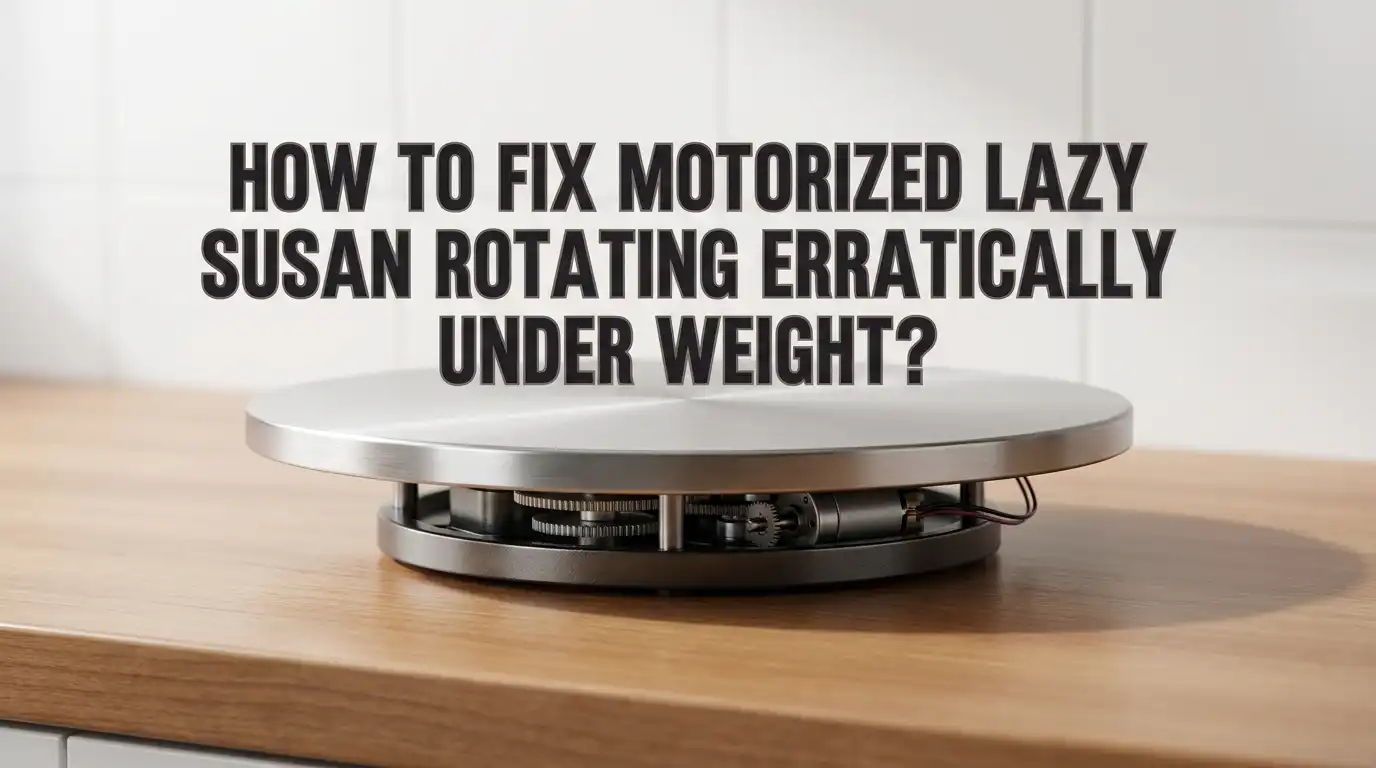
How To Fix Motorized Lazy Susan Rotating Erratically Under Weight?
Does your motorized lazy susan spin smoothly when empty, but wobble or jerk once you load it up? You are not alone. This is one of the most common problems with rotating trays, turntables, and display platforms.
The good news is that this issue almost always has a fixable cause. In most cases, the erratic movement comes down to weight distribution, bearing capacity, or motor strength.
Center of gravity alignment plays a huge role here, yet it is often overlooked. When your load sits off center, even a strong motor will struggle to spin it evenly.
In a Nutshell
- Center the load first. Place heavy items directly over the rotation axis. An unbalanced load is the top cause of wobbling and jerky spins.
- Check your bearing capacity. A 16 inch bearing should handle around 300 lbs. If your load exceeds this limit, the platform will struggle to rotate smoothly.
- Match motor torque to your load. Motors that spin too fast or lack power will stall or spin unevenly. Aim for the 5 to 6 rpm range for most display setups.
- Use a sturdy platform base. An aluminum plate helps spread weight evenly across the surface. This reduces pressure points that cause slipping.
- Test rotation direction. If your motor sometimes spins backward or randomly, this often points to an improper motor selection issue.
- Fix it step by step. Small adjustments to balance, bearing size, and motor speed often solve the problem completely. You rarely need a full replacement.
Why Motorized Lazy Susans Rotate Erratically Under Weight
A motorized lazy susan rotates erratically under weight due to several mechanical factors working against smooth operation. Understanding these causes helps you fix the problem quickly.
Unbalanced weight distribution is the primary culprit. When you place items unevenly across the surface, the center of gravity shifts away from the rotation axis. This creates wobbling, jerking, and uneven spinning speeds. Heavy objects positioned off center force the motor to work harder on one side than the other.
Bearing capacity mismatch causes slipping and stuttering. Each bearing has a maximum weight limit based on its size and design. If your load exceeds this limit, the bearing cannot support the weight properly. The platform tilts slightly, and friction increases dramatically. Rotation becomes uneven and unreliable.
Motor torque problems lead to inconsistent rotation. A motor that spins too fast lacks the power to handle heavy loads smoothly. A motor that spins too slowly may stall completely when weight increases. The motor needs proper matching to both your load weight and desired rotation speed.
Platform rigidity issues contribute to erratic movement. Thin or flexible platforms bend under uneven weight. This bending shifts the load away from the center axis during rotation. Metal platforms distribute weight more evenly than plastic or wood alternatives.
Bearing wear and damage also create problems. Over time, bearings accumulate dust and lose lubrication. Worn bearings cannot maintain consistent friction, causing the platform to slip and stick randomly. Damaged bearing races create vibration and wobbling.
These factors rarely act alone. Usually, multiple issues combine to create erratic rotation. Identifying which factors affect your specific setup is the first step toward a working solution.
Diagnosing the Root Cause of Erratic Rotation
When your motorized lazy susan starts wobbling or jerking under weight, you need to find the root cause. The problem is rarely just one thing. Instead, multiple mechanical issues work together to create that erratic spinning motion.
Unbalanced weight distribution is your first suspect. If heavy items sit off center, the rotation axis shifts. The motor then works harder on one side than the other. This creates stuttering and wobbling. You can test this by rotating an empty platform first. If it spins smoothly, weight imbalance is likely your issue.
Bearing capacity mismatch happens when you overload your bearing. Every bearing has a maximum weight rating. If your load exceeds that limit, the bearing slips and struggles. The platform may spin inconsistently or stop mid rotation. Check your bearing specifications against your actual load weight.
Motor torque problems occur when your motor lacks enough power for the load. A motor spinning too fast cannot control heavy items smoothly. A motor that is underpowered stalls and jerks. The speed and power must match your specific weight.
Platform rigidity issues also matter. A flimsy or warped platform flexes under weight. This flex causes wobbling even if everything else is aligned correctly. Sturdy platforms distribute weight evenly across the rotation axis.
Bearing wear and damage develop over time. Old bearings become loose and create play in the system. Damaged bearings develop flat spots or internal corrosion. These issues cause grinding sensations and erratic motion.
Start by checking each of these factors one at a time. This systematic approach helps you identify which problem actually affects your specific lazy susan.
Step-by-Step Fix: Aligning the Center of Gravity
The center of gravity is the single point where all weight concentrates. When this point sits directly above your rotation axis, the motor works efficiently. When it shifts to one side, your lazy susan wobbles and slips.
Start by measuring your platform. Find the exact middle point where the rotation axis sits. Mark this spot clearly so you can see it during the process.
Next, place your heaviest items first. Put them directly over that center mark. Heavy objects should sit as close to the middle as possible. This creates a balanced load that the motor can handle smoothly.
Add lighter items around the heavy ones. Keep them arranged in a circular pattern. This spreads weight evenly in all directions. Avoid stacking items on one side only.
Check your load distribution by spinning the platform slowly by hand. It should feel balanced and smooth. If one side feels heavier, adjust your items until resistance feels equal around the entire circle.
Once items are positioned, test the motorized rotation at low speed. The platform should spin without wobbling or jerking. If movement is still erratic, your load may still be off center. Make small adjustments and test again.
The key is patience. Small shifts in item placement create big improvements in rotation quality. Move heavy objects just a few inches and test. Repeat until your lazy susan spins smoothly.
This alignment method works because balanced loads require less motor power. Your motor can maintain consistent speed instead of struggling against uneven weight. The result is smooth, reliable rotation every time.
Checking and Upgrading Bearing Load Capacity
Your bearing system must match the total weight you plan to rotate. This is where most erratic rotation problems start. When you exceed a bearing’s load capacity, it slips and stutters under pressure.
First, measure your platform size and total load weight. A 16 inch turntable bearing typically handles 300 pounds safely. A 12 inch bearing manages around 150 to 200 pounds. Larger platforms support more weight, but only if the bearing rating matches.
Check your current bearing specifications. Look for the manufacturer’s load capacity rating. This number tells you the maximum safe weight the bearing can support continuously. Exceeding this limit causes the erratic wobbling you experience.
Compare your actual load weight to the bearing capacity. If your items weigh 250 pounds but your bearing only handles 200 pounds, you have found your problem. The bearing cannot support the load smoothly, so rotation becomes jerky and unpredictable.
You have two upgrade options. First, replace your current bearing with a larger capacity model. Second, distribute weight across multiple bearing points if your platform design allows it.
When upgrading, select a bearing with at least 25 percent more capacity than your maximum load. This safety margin prevents future problems as items shift during rotation.
Motor torque also connects to bearing capacity. A motor that is too weak will strain the bearing trying to move excess weight. Match your motor power to both the load weight and bearing specifications for smooth, consistent rotation.
Test your upgrade by rotating slowly at first. Listen for grinding or unusual sounds. These indicate the bearing still struggles under your load.
Matching Motor Torque and Speed to Your Load
Your motor needs to match both your load weight and your desired rotation speed. This matching process prevents erratic movement and reduces strain on your bearing system.
Start by calculating your total load weight. Add up everything you plan to rotate, including the platform itself. Write this number down. Most display applications need motors running between 5 and 6 revolutions per minute. Heavier loads typically require slower speeds to maintain smooth rotation.
Motor torque is the rotational force your motor produces. Think of it as the pushing power needed to spin your platform. A motor rated for 1 rpm might move 60 pounds smoothly. That same motor at 60 rpm could only handle 1 pound without slipping.
Check your motor’s specifications sheet. Look for the torque rating at your desired speed. If you want 10 rpm rotation with a 200 pound load, your motor must deliver enough torque at that specific speed. Undersized motors cause slipping and jerky movement. Oversized motors waste energy and create unnecessary vibration.
Match your motor choice to these three factors. First, know your total load weight. Second, decide your preferred rotation speed. Third, verify the motor delivers adequate torque at that speed.
High torque AC motors work well for most applications. They provide consistent power without speed fluctuations. Test your setup at low speed first, then gradually increase to your target speed. This gradual approach reveals whether your motor and bearing work together smoothly.
Your bearing system also depends on proper motor selection. A motor that stalls or struggles forces your bearing to work harder. Correct torque matching reduces bearing stress and extends system life significantly.
Tips for Even Weight Distribution and Smooth Operation
Even weight distribution is the most practical way to stop your motorized lazy susan from wobbling or slipping during rotation. When items sit unevenly on the platform, the motor works harder and bearings strain unnecessarily.
Start by identifying your heaviest items first. Place them as close to the center rotation axis as possible. This reduces stress on the outer edges of your platform. The closer heavy objects sit to the middle, the easier your motor can spin the entire load.
Arrange lighter items around the heavier ones in a circular pattern. Think of it like creating balanced layers. If you place all weight on one side, the platform tilts during rotation and causes the erratic movement you see.
Test your arrangement by hand first. Slowly spin the platform without power to feel if it rotates smoothly. You should notice minimal resistance when weight is centered properly. If the platform feels heavy on one side, adjust your items until it feels balanced.
Once your load sits evenly, run the motor at low speed initially. Gradual acceleration helps you spot any remaining balance issues before they cause damage. Watch for wobbling or unusual sounds during the first few rotations.
Small position adjustments create big improvements in performance. Moving a single heavy item just a few inches toward center can eliminate most rotation problems. This approach also reduces wear on your motor and bearing system since they work with balanced forces instead of fighting against uneven loads.
Remember that even distribution changes whenever you add or remove items. Take a moment to rebalance before each use to maintain smooth operation over time.
Common Mistakes That Cause Ongoing Rotation Problems
People often make simple mistakes that cause their motorized lazy susan to keep rotating badly. Understanding these errors helps you fix the problem quickly.
The most common mistake is placing heavy items off center. Your load needs to sit directly above the rotation axis, not toward one side. When weight shifts away from center, the motor works harder and the bearing struggles. This imbalance forces erratic spinning patterns that get worse over time.
Ignoring bearing weight limits causes ongoing problems too. Many people load their lazy susan without checking what the bearing can actually handle. If your platform holds 250 pounds but the bearing only supports 150 pounds, rotation will slip and wobble constantly. The bearing simply cannot support the load, no matter how well you balance it.
Choosing the wrong motor torque creates another major issue. A motor that is too weak cannot rotate heavy items smoothly. A motor that is too strong spins items too fast and causes jerky movements. Both situations lead to erratic rotation. You need a motor matched to your specific load weight and desired speed.
Failing to test gradually is another frequent error. People often start the motor at full speed immediately after loading items. This sudden movement reveals balance problems too late. Instead, rotate slowly at first to identify wobbling before it damages your system.
Not adjusting positions when items shift is also problematic. Your arrangement works well today but changes when you add or remove things. Rechecking your weight distribution after any changes prevents rotation problems from returning. Small position adjustments maintain smooth operation long term.
Troubleshooting Persistent Wobbling or Direction Issues
When your motorized lazy susan wobbles or changes direction unexpectedly, the problem usually stems from three main causes. First, your load may sit off center from the rotation axis. Second, your bearing system might be struggling with weight it cannot handle properly. Third, your motor may lack enough torque for smooth, consistent rotation.
Start by checking where your heaviest items sit on the platform. Place your hand on the rotating surface and feel for vibrations or resistance. If wobbling increases at certain points during rotation, your load distribution is uneven. This is the most common issue you’ll face.
Next, verify that your bearing system matches your total load weight. Your bearing has a maximum capacity rating that you must respect. If you’re pushing against this limit, the bearing struggles to maintain smooth rotation. The system becomes unstable under pressure.
Motor direction problems often indicate that your torque selection doesn’t match your load. A motor that’s too weak will slip and rotate inconsistently. The rotation may pause, reverse, or move erratically as the motor fights against resistance.
To fix persistent wobbling, make these checks in order. First, rebalance your items so weight spreads evenly around the center point. Second, measure your total load and confirm your bearing can handle it safely. Third, test your motor at very low speeds to see if it maintains consistent direction.
If wobbling continues after these steps, your bearing or motor likely needs replacement. Document which problem you found so you can select the right upgrade component. This information helps you avoid repeating the same mistake with your replacement system.
Final Thoughts
Fixing a motorized lazy susan is not complicated once you understand the basics. Weight balance and proper equipment solve most rotation problems.
Your rotating platform needs three things to work well. It needs balanced weight, a strong bearing, and the right motor. Miss any of these, and wobbling returns.
Start with weight distribution every time you load your platform. Place heavy items near the center. Keep the load balanced around the rotation axis.
Check your bearing capacity before you blame the motor. A bearing rated below your total load will always cause problems. This step gets skipped too often.
Match your motor torque to your actual needs. A motor that’s too weak struggles under load. One that’s too strong can cause jerky, uneven movement.
Testing matters more than guessing. Always run your platform at low speed first after loading it. Watch how it moves before increasing speed.
Small adjustments often fix big problems. Moving one item slightly can stop wobbling instantly. Don’t overlook this simple fix.
Remember that your setup changes each time you add or remove items. What worked yesterday might not work today. Recheck your balance regularly.
If problems persist after checking weight, bearing, and motor, something needs replacing. Worn bearings and mismatched motors don’t fix themselves over time.
Patience and observation solve most rotation issues. Take time to test your platform properly. Small changes in weight placement create noticeable improvements.
Your motorized lazy susan can work smoothly with the right care. Focus on balance first. Check your equipment second. These simple steps prevent most erratic rotation problems you’ll ever face.
Frequently Asked Questions
Why does my motorized lazy susan wobble when I add heavy dishes?
Wobbling happens when weight sits off center on the platform. Your motor works harder on one side, causing uneven rotation. The bearing system struggles to support imbalanced loads.
Check your weight placement first. Move heavy items closer to the center rotation axis. Even a few inches makes a big difference in performance. Test at low speed after adjusting positions.
Can the motor cause erratic rotation on its own?
Yes, but usually only if you chose the wrong torque level for your load. A motor that’s too weak spins inconsistently under weight. A motor that’s too strong can cause jerky movements.
Match your motor power to your actual load. Standard display applications use 5 to 6 rpm motors. Heavier items need higher torque motors. Check your motor specs against your total platform weight.
What bearing capacity should I look for?
Your bearing must support your total load weight plus the platform itself. A 16 inch bearing might safely hold 300 pounds, but yours could differ. Exceeding capacity causes slipping and wobbling.
Add up everything that goes on your platform. Include the platform weight itself. Choose a bearing rated for at least that total weight. Never load beyond the manufacturer’s limit.
How do I know if my bearing is failing?
Failing bearings make grinding sounds or feel rough when you spin manually. Wobbling that won’t stop after repositioning items signals bearing problems. Rotation that suddenly becomes very difficult also indicates wear.
Replace the bearing if manual testing reveals grinding or excessive resistance. A worn bearing cannot be fixed with repositioning or motor adjustments alone.

Hi, I’m Lola Griffin 👩💻, the voice and creator behind ResizerBox. I’m a passionate tech enthusiast who loves exploring the latest gadgets, smart devices, and trending Amazon electronics. Through my reviews, I share honest insights, real-world testing experiences, and practical buying advice to help readers make confident tech choices.