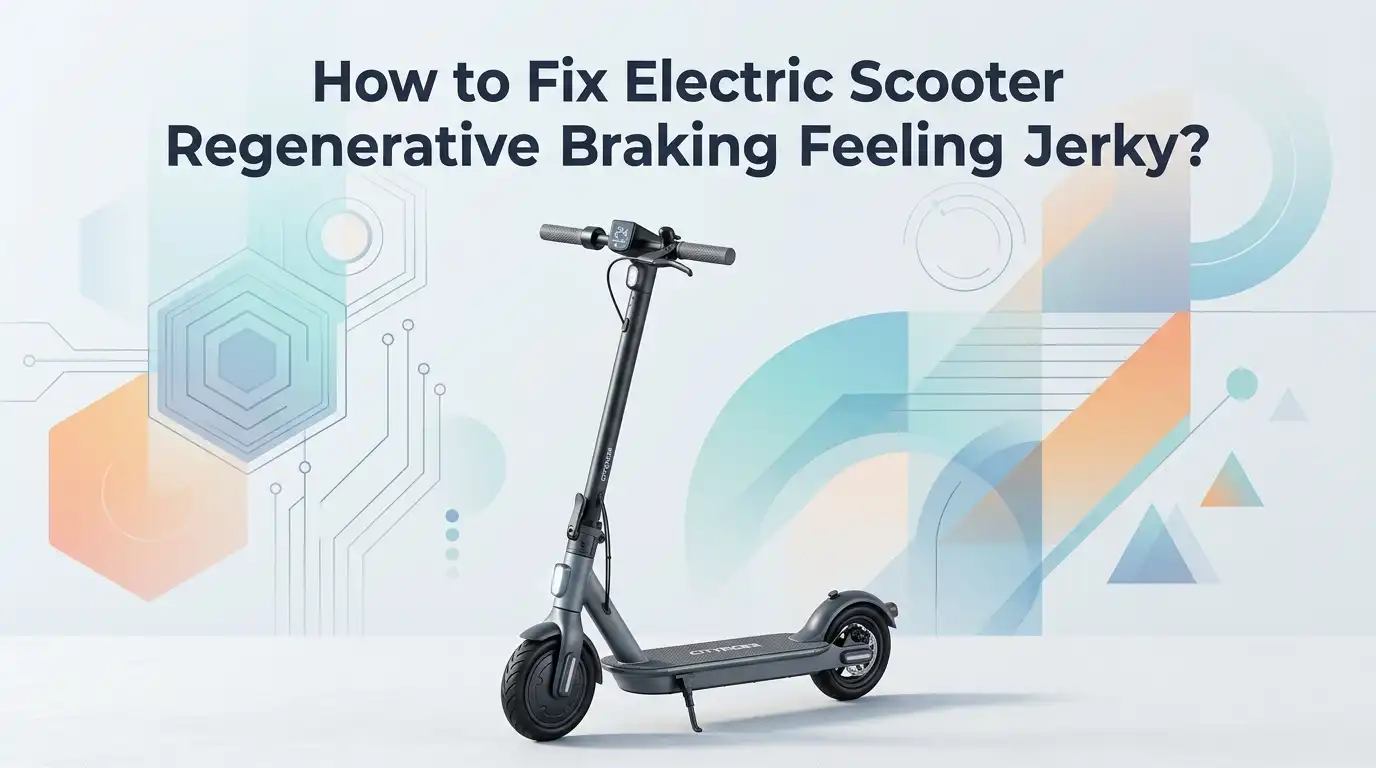
How to Fix Electric Scooter Regenerative Braking Feeling Too Jerky?
If your electric scooter snaps back the moment you let off the throttle or grabs too hard as you slow down, you are not imagining it. Jerky regenerative braking is a real problem.
It can make short rides annoying, wet roads feel risky, and stop and go traffic far less comfortable. The good news is that this issue usually has a clear cause. In many cases, you can improve it with a few simple checks and small setting changes.
Current scooter support guides and repair references show a common pattern. Strong regen settings, brake sensor issues, brake drag, high battery charge, and poor controller tuning often create the harsh feel riders hate.
Key Takeaways
- Start with the easiest fix first. Many scooters let you reduce regenerative braking strength in the app or display menu. If your scooter has weak, medium, and strong options, move to the weakest one and test it in a safe open area. Pros: fast, free, and low risk. Cons: you may lose some energy recovery and some riders may miss the stronger slowing effect on hills.
- Battery charge level matters more than many riders think. Regen can behave differently when the battery is near full. Some scooters reduce or change regen behavior to protect the battery, which can make braking feel odd or inconsistent. Pros: this is easy to test with a normal ride. Cons: it can fool you into chasing a repair when the scooter is actually reacting to battery limits.
- Mechanical brake issues can make regen feel worse. A rubbing rotor, tight cable, poor caliper alignment, or sticky brake lever sensor can create a harsh stop that feels like an electronic problem. Pros: fixing these issues improves safety and rolling efficiency. Cons: it may take basic tools and patience if you have never adjusted scooter brakes before.
- Rider input changes the feel of regen. If you fully release the throttle at speed, some scooters apply a strong slowing force right away. A softer roll off and smoother brake lever use can calm the stop. Pros: free and immediate. Cons: technique alone will not solve a real hardware or software fault.
- Advanced controller tuning can help, but only on the right scooter. DIY or performance scooters may let you lower regen current, soften throttle release response, or reduce motor current scale. Pros: this can produce the smoothest result. Cons: wrong values can trigger faults, battery stress, or unsafe braking behavior if you change settings without knowing your battery limits.
- Do not ignore signs of a real fault. If braking feels sudden, random, or much worse than before, check for sensor problems, firmware issues, wiring damage, or brake drag. If the scooter jerks hard even on low settings, stop using it until you inspect it. Pros: this protects you and the scooter. Cons: you may need a technician if the issue lives in the controller or brake electronics.
Why Regenerative Braking Feels Too Jerky
Regenerative braking works by using the motor to resist wheel rotation and send some energy back into the battery. That sounds smooth on paper, but the real ride feel depends on how the controller applies braking force. If the controller adds too much force too fast, the scooter can feel like it is grabbing the road.
Most jerky cases come from five areas. Regen strength is set too high, the throttle release map is too aggressive, the battery is near full, a brake sensor is misreading, or the mechanical brake system is dragging. Some scooters also feel harsher at low speeds because regen is less smooth near the final part of the stop.
Pros: once you know the likely causes, troubleshooting becomes much easier. Cons: the harsh feel can come from more than one issue at the same time, so you may need to check several areas before the ride feels right again.
Start With the Softest Regen Setting
The first fix is simple. Open your scooter app or display settings and look for energy recovery, e brake, electronic brake, or regenerative braking strength.
If you see weak, medium, and strong, choose weak. If you see numbered levels, move down one step at a time and test after each change.
This step works because many scooters leave the factory with stronger braking than some riders want. Support pages for several brands also suggest using the weak setting if the scooter pitches you forward during braking. If the scooter is brand new, the feel may also improve after a short break in period.
Pros: quick, free, and safe for most riders. Cons: weaker regen means less slowing force from the motor, so you may need to use your mechanical brake more often. That is normal and often gives a smoother stop anyway.
Check Ride Mode and Throttle Response
Some riders focus only on brake settings and forget the ride mode. That can be a mistake. Sport or high power mode often sharpens throttle response and can make the release feel abrupt. A harsh transition from drive to coast can feel like jerky regen even if the brake strength itself is unchanged.
Switch to a lower power mode and test the same road at the same speed. Then pay attention to your hand. If you suddenly snap the throttle closed, some scooters react with a stronger slowing sensation. Try easing off more gently and then blending in the brake lever if needed.
Pros: this costs nothing and helps you tell the difference between a settings issue and a true fault. Cons: if the scooter still jerks badly in low power mode with a smooth hand movement, the problem is likely deeper than rider input alone.
Test the Scooter at Different Battery Levels
Battery charge level changes how regen feels. When the battery is very full, the scooter has less room to accept energy from braking.
To protect the battery, many systems reduce or change regen behavior near full charge. That can make the slowing feel weaker, delayed, or odd compared with the rest of the battery range.
Do a simple test. Ride the scooter after a full charge, then ride it again after the battery drops to a moderate level. Use the same mode and the same regen setting. If the feel changes a lot, your scooter may be reacting normally to battery limits rather than suffering from a fault.
Pros: easy to test with no tools. Cons: it does not fix the issue by itself. It only helps you avoid wrong guesses. If the scooter is always jerky at every charge level, move on to the next checks.
Use Mechanical Brakes to Smooth the Last Part of the Stop
Regen works best as a controlled slowing tool. It is often less graceful at the last part of the stop, especially at low speed. That is why many scooters pair regen with drum, disc, or hydraulic brakes. If you rely on regen alone, the stop can feel grabby or uneven near walking pace.
A better method is to let regen handle the early slowdown, then use the mechanical brake lightly for the final part of the stop. This gives you more control and reduces the sudden pitch forward many riders feel. Practice in an empty lot until it becomes natural.
Pros: smoother stops, better balance, and better control in traffic. Cons: it takes a little practice, and it will not hide a sensor or brake setup problem if one already exists. Think of this as a riding fix, not a repair.
Inspect the Brake Lever Sensor and Cutoff Switch
Many scooters use a brake lever sensor or cutoff switch to trigger electronic braking and stop motor power. If that sensor sticks, misfires, or activates too early, the scooter can feel jerky even when you barely touch the lever. Some riders describe it as a sudden nose dip or a sharp power cut.
Check the lever feel first. It should move freely and return cleanly. Look for damaged wires near the lever and around the steering stem. If your scooter has a brake light that should come on with lever movement, test that too. A brake light that comes on too early or too late can hint at a sensor issue.
Pros: finding a bad sensor can solve a problem that settings never will. Cons: some sensors are built into the lever assembly, so replacement may take parts and careful installation. If the wiring looks damaged, stop riding until it is fixed.
Check Brake Cable Tension Caliper Alignment and Rotor Rub
A mechanical brake problem can easily feel like an electronic braking problem. If the cable is too tight, the pads can drag. If the caliper is off center, the rotor can rub once every wheel turn. If the rotor is slightly bent, braking can feel pulsed or grabby. All of this adds harshness to a stop.
Lift the wheel and spin it by hand. Listen for rub. Pull the lever and release it. The wheel should spin freely again. If it does not, inspect cable tension, caliper position, pad wear, and rotor straightness. Also make sure the brake light and electronic brake trigger still work after any cable adjustment.
Pros: fixing drag improves smoothness, range, and safety. Cons: brake adjustment needs patience and basic tools. If the rotor is bent badly or the caliper mount is damaged, a shop visit is the better choice.
Update Firmware and Reset Custom Settings
Some scooters let you change braking behavior through an app, and some receive firmware updates that affect throttle and braking logic.
If the jerky feel started after a setting change, app sync problem, or update, do not ignore the software side. A bad profile or odd setting mix can create a rough ride.
Check the app for firmware updates from the official maker. If the issue started after you changed multiple settings, write them down and return the scooter to the default brake and ride profile. Then test again in a safe area. Change only one setting at a time after that.
Pros: software fixes are clean and do not require parts. Cons: updates do not always solve the issue, and some scooters feel worse after a change if the default profile is more aggressive than your last one. Small step testing is the smart move.
Tune Advanced Controller Settings With Care
This section is only for scooters that clearly support advanced tuning. If your scooter uses a DIY or performance controller, you may be able to soften regen by lowering brake current, reducing motor current scale for off throttle regen, or changing the point where regen begins.
Some controller guides suggest starting with a very low regen scale, such as 5 to 15 percent, then testing slowly.
You also need to respect battery limits. Too much battery regen current can cause faults, battery stress, or shutdowns. If you do not know your battery charge limits, do not guess. Stay with official settings or ask a qualified technician.
Pros: this can deliver the smoothest custom braking feel. Cons: wrong changes can create unsafe behavior. This is not a beginner fix, and it is never worth risking battery damage for a slightly softer stop.
Clean Connectors and Look for Wiring Damage
Scooters live close to dust, water, vibration, and road grime. Over time, a loose connector or worn wire can create strange brake behavior. The scooter may cut power, pulse braking force, or feel different from one ride to the next. Riders often blame regen strength when the real problem is an unstable signal.
Check the visible wiring around the brake levers, stem, deck entry points, and motor cable path. Look for pinched insulation, sharp bends, loose plugs, or signs of water entry.
If your scooter recently fell over or had a stem service, inspect those areas first. Do not open sealed battery sections unless you know what you are doing.
Pros: a simple wire fix can solve a very annoying problem fast. Cons: hidden electrical issues can be hard to trace. If the symptom is random and returns after bumps, a technician with a meter may save you time.
Build a Smoother Braking Habit
Sometimes the scooter is fine, but the braking habit is rough. Many riders snap the throttle closed, stand too upright, and then grab the brake suddenly.
That makes regen feel worse than it is. A smoother technique reduces body pitch and helps you judge whether the scooter really has a problem.
Keep your knees soft and your weight slightly back before slowing down. Roll off the throttle gradually. Then add light lever pressure instead of waiting and braking late. On downhill sections, keep your speed in check early rather than asking the scooter to shed a lot of speed all at once.
Pros: free, safe, and useful on every scooter. Cons: technique cannot fix faulty hardware. If your scooter still gives a sharp jerk with calm inputs, treat it as a setup or repair issue and keep troubleshooting.
Know When to Stop Riding and Get Help
A mild harsh feel is one thing. A scooter that suddenly brakes hard, cuts power at random, or behaves differently every ride needs attention right away.
Stop riding if the wheel drags badly, the brake light acts strangely, the lever sticks, the motor pulses under braking, or the scooter jerks hard even on the lowest regen setting.
A professional check is also smart if the problem started after water exposure, a crash, a controller swap, or home wiring work. Ask for a full brake system inspection, sensor test, firmware check, and motor cable inspection. Clear symptoms help the shop find the issue faster.
Pros: early repair prevents bigger damage and keeps you safer. Cons: it costs time and money, but ignoring sharp braking faults can cost much more if you crash or damage the battery or controller.
FAQs
Can a full battery make regenerative braking feel strange?
Yes. A very full battery can change how regen behaves because the scooter has less room to send energy back into the pack. Some scooters reduce regen near full charge to protect the battery. That can make braking feel inconsistent or weaker. If the harsh or odd feel mostly happens right after charging, ride a bit and test again at a lower charge level before you assume something is broken.
Is it safe to turn regen off completely?
That depends on the scooter. Some models allow very low regen or no regen, while others blend electronic braking into the normal brake system. If your manual clearly allows it, turning it down can improve comfort. Still, do not disable a braking feature blindly. Make sure your mechanical brakes are strong and well adjusted first, then test in a safe area at low speed.
Why does the scooter jerk more at low speed?
Regen often feels less natural near the end of a stop. The motor is turning more slowly, so the braking effect can change in a way that feels uneven. That is why many riders use regen for early slowdown and the mechanical brake for the final part of the stop. If the jerk is extreme rather than mild, check for rotor rub, cable drag, or a brake sensor problem.
Do worn or badly adjusted brakes make regen feel harsher?
Yes. Dragging pads, a bent rotor, poor caliper alignment, or a sticky cable can add resistance and make the stop feel grabby. A bad brake sensor can also trigger motor cutoff and electronic braking too early. If your scooter does not coast freely with the wheel off the ground, fix the mechanical side before you blame the controller.
Should I change hidden settings in the display menu?
Only if your scooter manual explains them clearly and you understand what each setting does. Hidden menus can affect brake strength, throttle behavior, and battery protection. Random changes may make the ride worse or even unsafe. If you want a smoother feel, start with official app settings and simple brake checks first. Leave deep controller changes for advanced users or trained technicians.

Hi, I’m Lola Griffin 👩💻, the voice and creator behind ResizerBox. I’m a passionate tech enthusiast who loves exploring the latest gadgets, smart devices, and trending Amazon electronics. Through my reviews, I share honest insights, real-world testing experiences, and practical buying advice to help readers make confident tech choices.