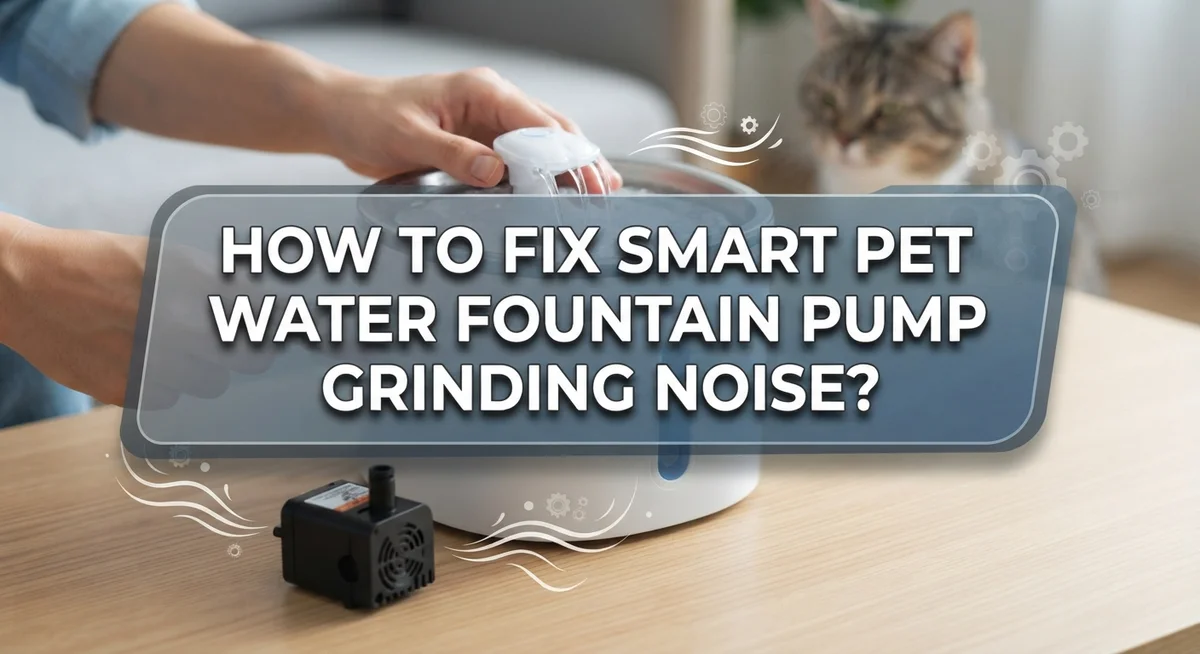
How To Fix Smart Pet Water Fountain Pump Grinding Noise?
That grinding noise from your pet’s water fountain can be really annoying. It often starts small. Then it grows into a sound that fills the whole room.
The good news? This problem is common and fixable. Most of the time, it does not mean your fountain is broken.
Low water levels cause most grinding sounds. When the pump sits above the water line, it struggles to run smoothly. Mineral buildup and debris on the impeller can also cause this issue. A dirty filter adds extra strain too.
In a Nutshell
- Check water levels first. Most grinding sounds happen when the pump sits above the water line. Refill the basin so it stays fully submerged.
- Inspect the impeller for buildup. Mineral deposits and debris often stick to this small part. This causes friction and that harsh grinding sound.
- Soak parts in vinegar solution. Mix warm water with white vinegar in equal parts. Let the impeller soak for twenty to thirty minutes to dissolve buildup.
- Clean the filter regularly. A dirty filter forces your pump to work harder. This strain often leads to grinding noises over time.
- Reassemble everything carefully. Put the impeller and filter back in their correct spots. Test the fountain to confirm the noise stops.
- Stick to a maintenance routine. Regular refilling and cleaning prevents most problems before they start. Your fountain runs smoother and quieter this way.
Why Your Pet Fountain Pump Makes a Grinding Noise
Your pet’s fountain pump makes a grinding noise for specific reasons. Understanding these causes helps you fix the problem quickly and keep your pet’s water clean.
The most common cause is low water level. When the basin doesn’t have enough water, the pump sits above the waterline. Air enters the pump instead of water. This causes the impeller (the spinning part inside) to grind against dry surfaces. The noise stops immediately once you refill the basin to the proper level.
Mineral buildup creates another grinding problem. Over time, calcium and other minerals stick to the impeller. These deposits make the impeller rough and unbalanced. When it spins, it grinds against the pump housing. Hard water areas experience this issue more often.
Debris and dirt also trigger grinding sounds. Particles get sucked into the pump and lodge on the impeller. The impeller can’t spin smoothly anymore. This friction produces that annoying grinding noise you hear.
A clogged filter forces your pump to work harder. When the filter traps too much dirt, water can’t flow properly. The pump strains to push water through. This extra stress creates grinding sounds and damages the pump over time.
Your fountain’s internal design matters too. Some pumps have tighter tolerances than others. They grind more easily when something goes slightly wrong. Cheaper models often have this weakness.
The good news? All these causes are fixable. Most grinding problems solve themselves with basic maintenance. Refill your fountain regularly, clean the filter often, and descale the impeller periodically. These simple steps prevent grinding noise and extend your pump’s life. Your pet gets fresh water, and you get peace and quiet.
Quick Fix: Check and Refill the Water Level First
Start here if your fountain is grinding. This is the fastest way to solve the problem.
Check your water basin right now. Open the top and look inside. The water level should reach the fill line marked on your fountain. Many pet owners forget this simple step, but low water causes the pump to suck air instead of liquid. When air enters the pump chamber, the impeller spins without proper lubrication. This creates that grinding sound you hear.
Fill the basin to the correct level. Use clean, fresh water. Pour slowly so you do not splash. Wait about 30 seconds after filling. Listen carefully. The grinding noise should stop or become much quieter. If the sound disappears completely, you found your problem.
Keep refilling on schedule. Most fountains need topping off every 2 to 3 days. This depends on your pet’s drinking habits and your climate. Hot, dry weather causes faster evaporation. Check water levels daily if you live in a warm area.
Mark your calendar. Set a phone reminder to check water levels each morning. This prevents the pump from running dry. Regular refilling stops grinding before it starts.
This quick fix works for roughly 70 percent of grinding noise complaints. Your pet’s fountain should operate quietly once the water level is correct. The pump needs to stay fully submerged at all times.
If grinding continues after refilling, move to the next step. You may need to clean internal parts. Mineral buildup or debris could be the real culprit.
Step-by-Step Guide to Cleaning the Impeller and Pump
Start by unplugging your fountain from the power outlet. This keeps you safe while you work with the pump components. Wait a few minutes to let any moving parts stop completely.
Locate the pump housing at the base of your fountain. Most pumps sit inside a small chamber beneath the water basin. Gently lift or unscrew the pump assembly according to your fountain’s design.
Find the impeller inside the pump. This small wheel has curved blades that push water through the system. Mineral deposits and hair often collect on these blades, causing the grinding sound you hear.
Carefully remove the impeller from its shaft. Take a photo with your phone before you remove it. This helps you remember exactly how it goes back together later.
Fill a cup with equal parts white vinegar and warm water. Submerge the impeller in this solution for 20 to 30 minutes. The vinegar breaks down mineral buildup without damaging the plastic or rubber parts.
Use a soft brush or old toothbrush to gently scrub the impeller blades. Pay special attention to the spaces between each blade. Rinse thoroughly under clean running water until no vinegar smell remains.
While the impeller soaks, clean your filter separately. Rinse it under warm water and remove any visible debris or buildup.
Dry both parts completely with a clean cloth. Reattach the impeller to its shaft, matching the position from your photo. Slide the pump assembly back into place and secure it firmly.
Refill your fountain basin to the proper water level. Plug in the fountain and listen for normal operation. The grinding noise should be gone or significantly quieter now.
How to Properly Clean the Filter
A dirty filter puts extra strain on your pump motor. This pressure causes the grinding noise you hear. Cleaning your filter regularly stops this problem before it starts.
Start by unplugging your fountain completely. Safety comes first when working with electrical devices. Wait a few seconds to ensure power is fully cut.
Locate your filter cartridge. Most fountains have filters near the pump area or inside the main basin. Check your fountain’s manual if you’re unsure where it sits.
Remove the filter carefully. Some filters slide out, while others twist counterclockwise. Handle it gently to avoid damaging the filter material.
Rinse the filter under warm running water. Hold it under the tap and let water flow through the material. This removes loose debris and buildup quickly.
For stubborn mineral deposits, soak your filter. Place it in a cup with equal parts white vinegar and warm water. Let it sit for 20 to 30 minutes. The vinegar dissolves mineral scale that regular water can’t remove.
Use a soft brush to gently scrub the filter surface. An old toothbrush works perfectly for this task. Brush gently in one direction to avoid pushing debris deeper into the material.
Rinse thoroughly after soaking. Run clean water through the filter until the vinegar smell disappears completely.
Dry your filter with a clean cloth or paper towel. Make sure no moisture remains before reinstalling it. A wet filter can cause electrical issues.
Replace your filter in its original position. Twist or slide it back firmly until it sits securely. Check that it’s seated properly before plugging your fountain back in.
Clean your filter every 2 to 4 weeks for best results. Regular maintenance keeps your pump running smoothly and quietly.
Reassembling the Pump and Testing for Silence
Now comes the moment of truth. You’ve cleaned everything and dried all the parts. Your impeller is fresh, your filter is spotless, and your pump housing is ready. Time to put it back together.
Start by reinserting the impeller onto its shaft. Push it straight down until you hear or feel a soft click. Don’t force it. The impeller should sit flush with the pump housing. If it feels stuck, remove it and check for any remaining debris on the shaft itself.
Next, place the filter back in its slot. Make sure it sits evenly in the cartridge holder. A misaligned filter can cause vibrations that sound like grinding. Verify the filter is secure before moving forward.
Reattach the pump housing to the basin. Line up all connection points carefully. Tighten any clips or fasteners gently. Over tightening can crack plastic components.
Fill your basin with fresh water to the proper level. This step matters more than you might think. A fully submerged pump runs quietly. An air exposed pump grinds.
Plug the fountain back in and listen closely for the first 30 seconds. A healthy pump makes a soft, steady hum. You might hear water flowing through the tubes. That’s normal.
Let it run for 2 to 3 minutes while you observe. The noise should stay consistent and quiet. If grinding returns, unplug immediately and check your water level first. Low water is the most common culprit for recurring noise.
If silence greets you, congratulations. Your pump is fixed. Keep up with regular refills and monthly filter cleaning to prevent future problems.
Common Mistakes That Cause Recurring Grinding Noise
Many pet owners make simple mistakes that keep the grinding noise coming back. Understanding these errors helps you stop the problem for good.
The biggest mistake is ignoring water level checks. People assume the fountain stays full, but water evaporates and pets drink from it daily. A pump that runs without enough water gets starved for liquid. This causes the impeller to spin without proper lubrication, creating that annoying grinding sound. You need to check your basin every single morning.
Another common error is waiting too long between filter cleanings. A clogged filter forces your pump to work harder than it should. The motor strains, and grinding noise develops quickly. Many owners only clean filters when they remember, but consistent maintenance prevents most problems. Clean your filter every 2 to 4 weeks without fail.
People also ignore early warning signs. Grinding noise doesn’t appear suddenly. It starts as a soft sound that gets louder over time. If you hear any unusual noise, take action immediately. Waiting makes the problem worse and can damage your pump permanently.
Not disassembling and cleaning the impeller regularly causes mineral buildup. Hard water deposits collect on the impeller blades over weeks. This buildup creates friction and grinding sounds. A simple vinegar soak removes these deposits easily, but many owners skip this step.
Finally, some people reassemble parts incorrectly after cleaning. The impeller must sit properly on its shaft. The filter needs to fit snugly in its slot. Poor reassembly causes misalignment, which triggers grinding noise again.
Avoid these mistakes by staying consistent with water refills, filter cleaning, and regular impeller maintenance. Your fountain will run quietly and last much longer.
Ongoing Maintenance Tips to Prevent Future Pump Noise
Preventing pump noise starts with understanding what causes it in the first place. The main culprits are low water levels, mineral deposits, and dirty filters. By addressing these issues before they become problems, you keep your fountain running quietly.
Refill your fountain regularly. This is the single most important step. Check the water level every few days, not just when you remember. A pump that runs dry will grind and struggle. Keep the basin filled to the recommended line marked on your fountain. This takes just 30 seconds and prevents most noise issues completely.
Clean your filter every 2 to 4 weeks without fail. A clogged filter forces your pump to work harder, which creates strain and noise. Remove the filter, rinse it under warm water, and look for any visible debris or buildup. If you see mineral deposits, soak it briefly in a vinegar and water solution. This simple habit stops problems before they start.
Descale your impeller periodically even when it sounds fine. Mineral buildup happens slowly and silently. Every month or two, disassemble your pump and soak the impeller in a 50/50 white vinegar and warm water mixture for 20 to 30 minutes. Gently brush away any deposits with a soft toothbrush. This prevents grinding noise from developing.
Stay consistent with these three tasks and your fountain will remain quiet. Don’t wait for noise to appear before taking action. Regular maintenance is always easier and cheaper than fixing a damaged pump later. Your pet gets fresh, flowing water, and you get peace and quiet.
Troubleshooting: When the Grinding Noise Persists
When the grinding noise continues despite your efforts, a few specific issues need your attention. The problem usually points to one of three culprits: incomplete water coverage over the pump, stubborn mineral deposits that resist basic cleaning, or a filter that needs deeper treatment.
Start by checking your water level one more time. Many fountains require water to reach a specific line marked inside the basin. If water sits below this mark, the pump cannot function properly. Add fresh water until it reaches the correct level, then listen for 30 seconds.
If noise persists, your impeller likely has heavy mineral buildup. Remove the impeller and soak it in a 50/50 mixture of white vinegar and warm water for 20 to 30 minutes. This solution breaks down calcium and mineral deposits that cause grinding sounds. After soaking, rinse the impeller thoroughly under running water.
Your filter may also need stronger cleaning. Soak it in the same vinegar solution for 15 to 20 minutes, then use a soft brush to gently scrub both sides. Rinse completely until no vinegar smell remains.
Reassemble everything carefully: place the impeller back on its shaft first, then insert the filter into its slot. Make sure the pump housing sits flush against the basin with no gaps.
Fill the basin to the proper water level again. Plug in your fountain and listen closely for the first minute. If grinding continues, the pump motor itself may be worn and need replacement. Contact the manufacturer for guidance on motor replacement options.
Final Thoughts
A grinding noise from your pet’s water fountain pump is usually simple to fix. In most cases, the problem comes down to low water levels or a dirty impeller. Both issues are easy to resolve at home.
You do not need special tools or technical skills. A basin refill, a vinegar soak, and a filter clean will solve the problem most times. These small steps make a big difference in how your fountain sounds and runs.
Think of your fountain like a car engine. It needs regular care to keep running smoothly. Skipping maintenance leads to bigger problems down the road.
The good news is that prevention is simple. Check the water level every day or two. Clean the filter every few weeks. Descale the impeller once a month, even if the fountain seems quiet.
Your pet depends on this fountain for clean, fresh water. A noisy pump might also mean the water is not circulating properly. This can affect water quality over time.
Catching problems early saves you time and effort later. A five minute check today can prevent a full pump breakdown next month. Small habits build long term reliability.
If you follow the steps outlined here, your fountain should run quietly again. Most pet owners see results within minutes of proper cleaning and refilling.
Remember that consistency matters more than perfection. You do not need to be flawless with maintenance. You just need to stay steady with the basics.
A quiet fountain means a happy pet and a peaceful home. With a little attention, your fountain will keep flowing smoothly for a long time. Your pet will thank you with every sip.
Frequently Asked Questions
Why is my pet fountain pump making a grinding noise?
A grinding sound usually means one of three things. Your water level might be too low, so the pump isn’t fully submerged. Mineral deposits could be stuck on the impeller. Or your filter might be clogged and forcing the pump to work harder.
How do I know if low water is the problem?
Check your basin first. The water should reach the fill line marked on your fountain. If it’s below that line, top it off with fresh water. Listen carefully. The grinding noise often stops within seconds once the pump sits in enough water.
What’s the best way to clean mineral buildup?
Disassemble your pump carefully and remove the impeller. Soak it in a 50/50 mixture of white vinegar and warm water for 20 to 30 minutes. The vinegar dissolves mineral deposits naturally. Rinse it thoroughly under running water before reassembling.
How often should I clean the filter?
Clean your filter every 2 to 4 weeks. A dirty filter makes the pump work overtime and creates grinding sounds. Rinse it gently under cool water. If it looks really caked with debris, soak it briefly in water before rinsing.
What if the noise still won’t stop?
Double check your water level again. If grinding continues, your impeller probably has heavy mineral buildup that needs soaking longer. Make sure you reassemble everything correctly. The impeller goes back on its shaft first, then the filter slides into its slot. Fill the basin to the proper level and test it.

Hi, I’m Lola Griffin 👩💻, the voice and creator behind ResizerBox. I’m a passionate tech enthusiast who loves exploring the latest gadgets, smart devices, and trending Amazon electronics. Through my reviews, I share honest insights, real-world testing experiences, and practical buying advice to help readers make confident tech choices.