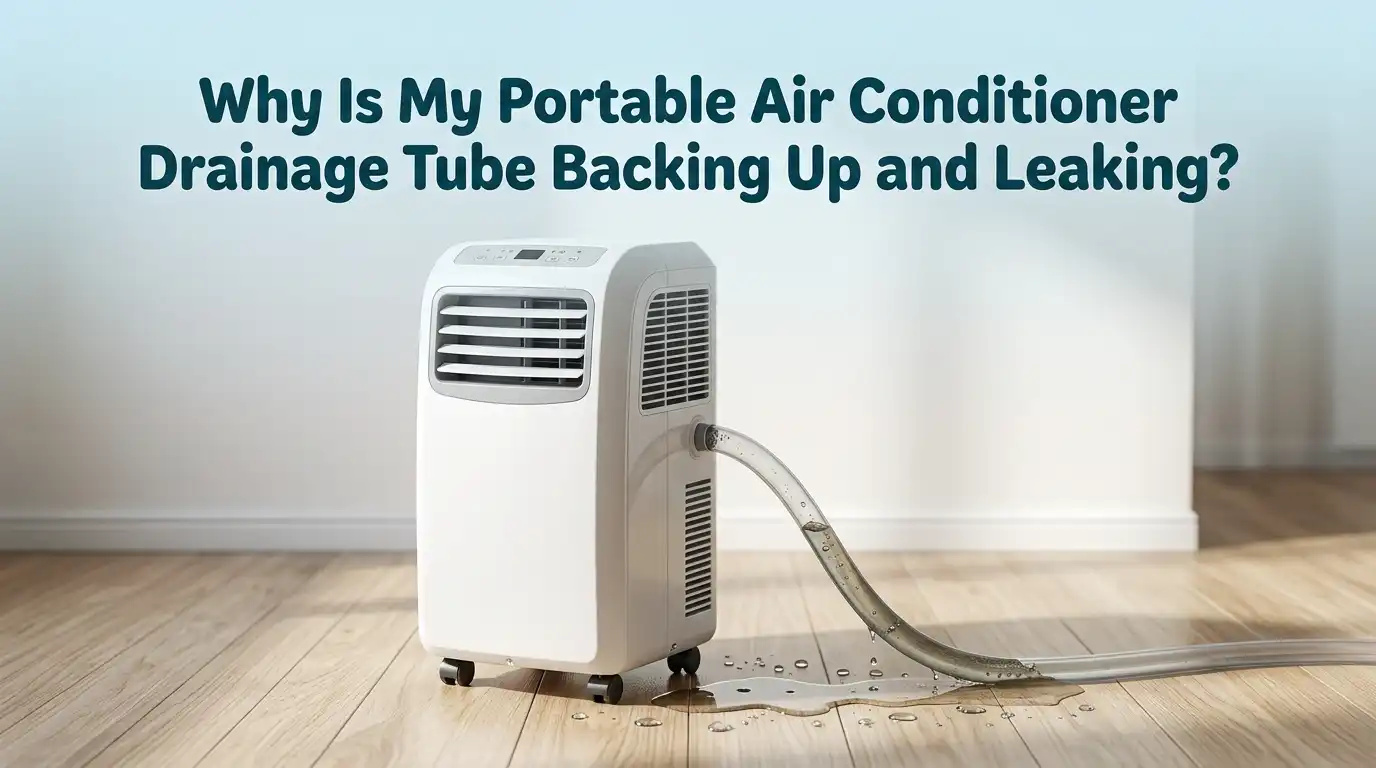
Why Is My Portable Air Conditioner Drainage Tube Backing Up and Leaking?
Your portable air conditioner should keep your space cool and dry. But when water starts pooling on the floor or the drain tube backs up, that comfort turns into a mess fast.
A leaking drainage tube is one of the most common issues homeowners face with portable AC units, and the good news is that most causes are simple to fix at home.
This problem usually points to a clog, a kink, a slope issue, or high humidity overwhelming the system. You do not need to call a technician right away.
Key Takeaways
- Clogged drain lines are the top cause. Dust, mold, algae, and mineral buildup block the inside of the tube and force water back into the unit, where it leaks out onto your floor.
- Tube placement matters more than you think. The drain hose must slope downward the entire way. Even a small upward bend or kink can trap water and cause a backup.
- High humidity overloads the system. When indoor moisture is very high, the unit produces more condensate than the drain can handle, so the internal pan fills up and overflows.
- A loose drain plug or cracked pan causes silent leaks. Always check the rubber plug, drain cap, and the condensate tray for cracks or worn seals.
- Regular cleaning prevents 90% of issues. Flushing the drain line with vinegar every month and washing the filter keeps water flowing freely and stops mold growth.
- Most fixes cost under $10. A wet/dry vacuum, white vinegar, and a soft brush are usually all you need to solve the problem yourself.
Understanding How Your Portable AC Handles Water
Your portable air conditioner pulls warm, moist air from the room and cools it across cold coils. As the air cools, water droplets form on those coils. This water, called condensate, drips into a collection pan inside the unit.
From the pan, the water either evaporates back into the exhaust air or flows out through a drain hose. Some models use a hybrid system that does both. When everything works right, you barely notice the water.
But when the drain tube clogs or the pan overflows, water has nowhere to go. It spills out of the bottom of the unit or backs up through the tube. Knowing this flow helps you spot exactly where the problem starts.
Reason 1: A Clogged Drain Line Is Blocking the Water
A blocked drain line is the number one cause of backups. Over time, dust from your room mixes with moisture inside the tube. That damp dust creates a sticky film that catches more debris.
Mold, algae, and even small insects can grow inside the dark, wet hose. Hard water also leaves mineral deposits that narrow the inside of the pipe. Eventually, the opening gets so tight that water cannot pass through.
You will notice water leaking from the unit even though the drain tube is connected. The fix is simple: you need to flush the line. Disconnect the hose, hold it over a sink or bucket, and pour warm water mixed with white vinegar through it. Let it sit for 15 minutes, then rinse.
Pros: Cheap, fast, and uses items you already have.
Cons: You may need to repeat it monthly if humidity stays high in your room.
Reason 2: The Drain Hose Is Kinked or Bent
A kink in the hose acts like a roadblock. Water cannot push past a sharp bend, so it backs up into the unit. This is one of the most overlooked causes because the hose looks fine at first glance.
Check the entire length of the tube. Look for tight curves behind furniture, twists near the wall, or spots where the hose is pinched under the AC unit itself. Even a small upward loop traps water.
To fix this, straighten the hose and route it in a smooth, downward slope from the unit to the drain point. If the hose has a permanent crease, replace it with a new one of the same diameter.
Pros: Costs nothing if you just reroute the tube.
Cons: Replacing a kinked hose may require finding the exact size your model uses.
Reason 3: The Drain Tube Slopes Upward
Water only flows downhill. If any part of your drain tube runs uphill, water will collect at the low point and eventually overflow back into the unit.
Walk along the hose with your eyes and follow its path. The exit point of the tube should always sit lower than the drain port on the AC. If you are draining into a bucket, place the bucket on the floor, not on a stool or table.
For continuous drainage setups, run the hose to a floor drain or outside through a window. A gentle, steady slope of at least one inch per foot works best. You can secure the hose with clips or zip ties to hold its position.
Pros: Gravity does the work, no pump needed.
Cons: You need a drain point lower than your AC, which is not always easy in upper floors.
Reason 4: High Humidity Is Producing Too Much Water
When the air in your room is very humid, your AC pulls out far more water than usual. The drain system can get overwhelmed, especially in basements, coastal areas, or during rainy seasons.
You might empty the tank or check the drain line and still see leaks within hours. This is because the unit is making condensate faster than the hose can carry it away.
The solution is to reduce indoor humidity and help the drain keep up. Close windows and doors while the AC runs. Run a separate dehumidifier in very damp rooms. Make sure your exhaust hose is short, straight, and well sealed so warm humid air does not leak back inside.
Pros: Lower humidity also makes the room feel cooler at the same temperature.
Cons: Buying a dehumidifier adds extra cost and uses more electricity.
Reason 5: A Dirty Air Filter Is Causing Ice Buildup
A clogged filter restricts airflow across the cooling coils. When airflow drops, the coils get too cold and frost forms on them. When the unit shuts off or cycles, that ice melts all at once.
The sudden flood of water overwhelms the drain pan and tube. You will often see water leaking right after the AC turns off, not while it is running.
To fix this, slide out the filter and rinse it under warm running water. Use a soft brush to remove dust if needed. Let it air dry completely before putting it back. Clean your filter every two weeks during heavy use.
Pros: Improves cooling performance and saves energy at the same time.
Cons: You need to remember to do it regularly, or the problem returns.
Reason 6: The Condensate Pan Is Cracked or Overflowing
The internal pan catches all the water before it drains. If the pan has a crack, water leaks out the bottom of the unit no matter how clean your hose is.
To check this, unplug the AC and remove the back or side panel according to your manual. Look at the pan for visible cracks, warping, or rust spots. Run your finger along the edges to feel for hairline splits.
If you find a crack, you have two choices. Seal small cracks with food grade silicone or epoxy putty rated for plastic. For larger damage, order a replacement pan from the manufacturer.
Pros: Sealing is a quick, low cost repair.
Cons: Repairs may not last long if the pan is very old or brittle.
Reason 7: The Drain Plug Is Loose or Worn Out
Most portable AC units have a small rubber drain plug at the bottom. If this plug is loose, missing, or worn, water leaks out steadily even when the drain hose works fine.
Tip the unit gently and look at the underside or back near the base. You should see one or two threaded plugs with rubber gaskets. Tighten them by hand and check if the gasket looks flat or cracked.
Replace any worn rubber seal with a new one of the same size. You can find universal AC drain plugs at most hardware stores. A new plug usually costs less than three dollars.
Pros: One of the cheapest and easiest fixes possible.
Cons: Finding the exact size for older models can take some searching.
Reason 8: The Drain Pump Has Failed
Some portable air conditioners use a small internal pump to push water out, especially models that drain upward or have long hoses. If this pump fails, water has no way to leave the pan.
You will usually hear a buzzing or clicking sound when the pump tries to run. Sometimes there is no sound at all. The unit may also flash an error code like E5 or P1 to warn you.
Testing the pump requires opening the unit. If you are comfortable with basic electronics, check the wiring and pump motor with a multimeter. Otherwise, this is the one repair where calling a technician makes sense.
Pros: Replacing a pump restores full drainage even on tricky setups.
Cons: Parts cost between $30 and $80, and DIY repair voids some warranties.
Reason 9: Mold and Algae Are Growing Inside the Tube
Dark, damp drain tubes are perfect homes for mold and algae. A thick, slimy growth narrows the inside of the hose until water can barely trickle through. You may also notice a musty smell coming from the unit.
To clear this, mix one cup of white vinegar with one cup of warm water. Pour the mix slowly into the drain port using a funnel. Let it sit for 30 minutes to kill the growth.
Then flush the line with plain water until it runs clear. For tough buildup, use a wet/dry vacuum on the outlet end of the hose to suck out the sludge. Repeat every month during heavy AC use.
Pros: Kills mold, removes odors, and clears the clog in one step.
Cons: Strong vinegar smell lingers for a few hours after cleaning.
Reason 10: The Unit Is Not Level
A portable AC must sit on a flat, level surface for the drain system to work right. If the unit tilts forward, backward, or to one side, water pools in the wrong corner of the pan instead of flowing toward the drain port.
Place a small bubble level on top of the unit and check both directions. If it tilts, slide thin shims or pieces of cardboard under the low corners until it sits flat.
Most portable units are designed to tilt very slightly backward to help water drain out the rear. Check your manual for the exact recommendation. Even a half inch of tilt can cause leaks.
Pros: Costs nothing and takes only minutes to fix.
Cons: Uneven floors may need permanent shims or a sturdy platform.
How to Prevent Drainage Backups in the Future
Prevention is much easier than repair. Set a reminder to clean your filter every two weeks and flush the drain line with vinegar once a month. These two habits stop most problems before they start.
At the end of each cooling season, drain the unit completely. Remove all water from the pan, blow out the hose, and store the AC in a dry spot. This prevents mold from growing during the off months.
When you set up the unit each year, check the hose for cracks, the plug for wear, and the slope of the drainage path. A five minute inspection can save you hours of cleanup later. Keep the area around the AC clear so air flows freely across the coils.
When to Call a Professional Technician
Most drainage issues are easy to fix at home. But some situations call for an expert. If your unit is still under warranty, contact the manufacturer before opening it yourself.
Call a technician if you see refrigerant leaks, frozen coils that will not thaw after cleaning the filter, electrical issues like sparks or burning smells, or if the drain pump needs replacement and you are not comfortable with the repair.
Also reach out for help if leaks continue after you have tried every fix in this guide. There may be a deeper issue with the coils or compressor. A professional inspection usually costs less than buying a new AC unit.
Frequently Asked Questions
How often should I clean my portable AC drain line?
Clean the drain line once a month during heavy use. In humid climates or if the unit runs around the clock, clean it every two weeks. Regular cleaning stops mold and mineral buildup before they cause backups.
Can I use bleach to clean my AC drain tube?
Yes, but use it carefully. Mix one part bleach with four parts water and pour it through the drain port. Let it sit for 15 minutes, then flush with plain water. Never mix bleach with vinegar, as it creates toxic fumes.
Why does my portable AC leak only when it is hot outside?
Hot, humid weather makes your AC pull more moisture from the air. The drain system may not keep up with the extra water. Check for clogs, clean the filter, and consider running a dehumidifier alongside the AC.
Is it normal for a portable AC to drip water?
A small amount of condensation on the outside of the unit is normal in very humid conditions. But steady dripping or pooling water on the floor means something is wrong. Check the drain line, pan, and plugs right away.
Can I run my portable AC without the drain hose connected?
Most modern units have a built in evaporation system that handles light condensate without a hose. But in humid weather, the internal tank fills up quickly. You must empty it often or connect a hose to avoid overflow leaks.
What does the E5 or P1 error code mean on my portable AC?
These codes usually mean the water tank is full or the drain system is blocked. Empty the tank, check the drain hose for clogs, and make sure the drain plug is sealed. The error should clear once water can flow freely again.

Hi, I’m Lola Griffin 👩💻, the voice and creator behind ResizerBox. I’m a passionate tech enthusiast who loves exploring the latest gadgets, smart devices, and trending Amazon electronics. Through my reviews, I share honest insights, real-world testing experiences, and practical buying advice to help readers make confident tech choices.