
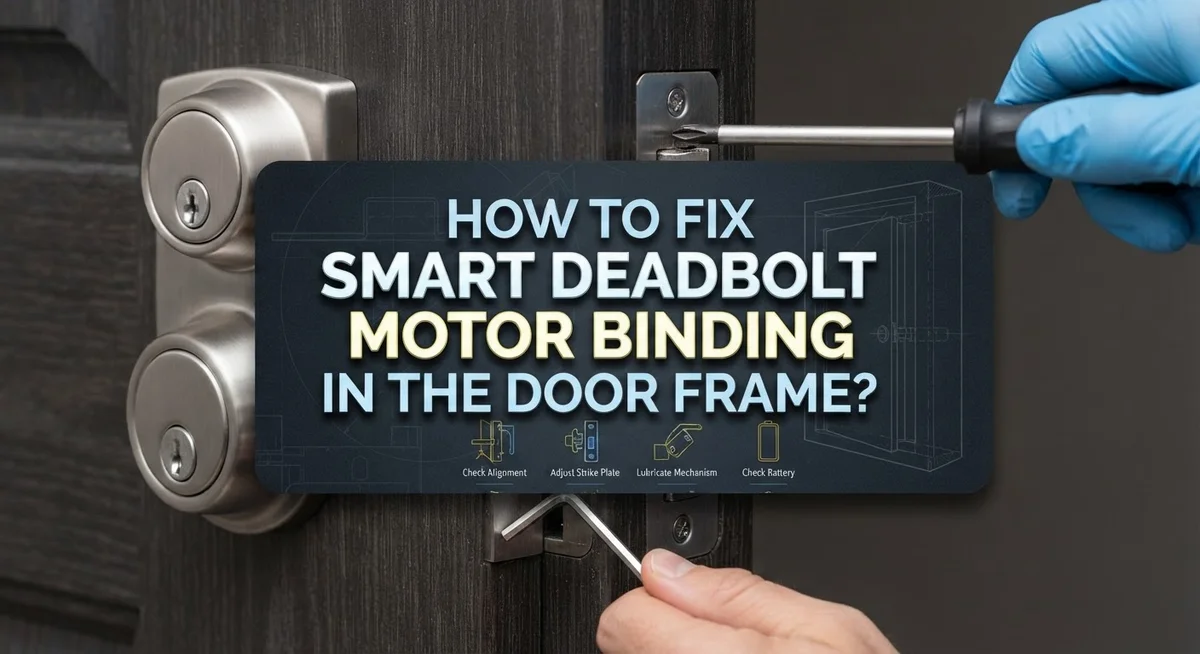
How To Fix Smart Deadbolt Motor Binding In The Door Frame?
Does your smart deadbolt grind, stick, or struggle to lock every time you close the door? You are not alone.
This annoying issue usually points to motor binding. It happens when the bolt fights against a misaligned door frame or strike plate.
Over time, this friction puts stress on the motor. Left unchecked, it can drain batteries fast or even burn out the lock entirely.
In a Nutshell
- Find the real problem first. Test the lock with the door open. If it works fine, your frame or strike plate is the issue, not the motor.
- Check your strike plate. Loose screws or a misaligned plate are the top reasons for binding. Adjust the plate so the bolt slides in easily.
- Inspect the hinges. Sagging doors often come from loose or stripped hinges. Tighten the screws or swap in longer ones for a tighter grip.
- Use the toothpick trick. If a hinge hole is stripped, plug it with a toothpick before you rescrew. This gives the screw something solid to grip.
- Add some lubricant. A little graphite or silicone spray on the bolt and internal gears reduces friction right away.
- Adjust for a tight fit. Sometimes you need to file the strike plate or bend the hinge bracket slightly for a smooth close.
Understanding Why Smart Deadbolt Motors Bind
Motor binding happens when your smart deadbolt’s locking mechanism fights against resistance as it tries to extend or retract. The motor inside your lock works hard to push the bolt forward, but if something blocks its path, the motor strains and you hear grinding or clicking sounds.
The main culprit is door misalignment. When your door frame shifts even slightly, the bolt no longer slides smoothly into the strike plate. Instead of gliding in, it catches on the edge of the plate or rubs against the door frame itself. This friction forces your motor to work overtime.
Strike plate problems are extremely common. If the plate sits crooked or the mounting screws have loosened over time, the bolt cannot find its proper path. The bolt then scrapes against metal or wood, creating that binding sensation you feel when locking.
Loose or damaged hinges also cause binding. A sagging door pulls the frame out of square, which means the bolt and strike plate no longer line up properly. Stripped hinge screws make this problem worse because the door sags more as time passes.
Dirt and debris inside the lock mechanism can also trigger binding. Dust, pet hair, or rust particles get stuck inside the motor housing or bolt channel. These particles block smooth movement and force the motor to push harder.
Finally, worn internal gears or a bent bolt can cause binding. If your lock is several years old, normal wear and tear may have damaged the mechanical parts inside. A bent bolt will catch on the strike plate every single time.
Understanding which cause affects your lock helps you choose the right fix quickly.
Diagnosing the Problem: Door, Frame, or Strike Plate?
Your smart deadbolt binds for one of three main reasons: the door itself, the frame, or the strike plate. Finding which one is causing trouble saves you time and effort.
Test with the door open first. Unlock and lock your deadbolt while the door swings freely. If the motor runs smoothly without resistance, your problem lies in the door or frame. If the motor still struggles, the issue is inside the lock itself.
Now check your strike plate alignment. This metal plate sits on the door frame where the bolt enters. Loosen the screws holding it in place. Try locking the door again. If the bolt slides in easier, you found your problem. The strike plate was pushing back against the bolt. Adjust it slightly up, down, or forward until the bolt enters without friction.
Next, inspect your door hinges. A sagging door creates misalignment throughout the entire frame. Look for loose screws on all hinges. Tighten them firmly. If a screw spins without gripping, the hole is stripped. Use a toothpick or wooden matchstick in that hole before rescrew. The wood fills the gap and gives the screw something to bite into.
Check if your door frame is warped. Close the door gently and look for gaps between the door edge and frame. Uneven gaps mean the frame shifted. You may need to file down the strike plate slightly or bend the hinge bracket in a vice for larger corrections.
Document what you find. Take photos of loose screws or gaps. This information helps you decide whether a simple adjustment works or if professional help is needed.
Step-by-Step: Realigning the Strike Plate
The strike plate sits on your door frame and guides your bolt into place. When it misaligns, your motor works harder and binding happens fast. Let’s fix this step by step.
Start by loosening the screws. Open your door fully and locate the strike plate on the frame. Use a screwdriver to loosen all mounting screws slightly. Don’t remove them completely. You need room to shift the plate.
Test the bolt position. Lock and unlock your deadbolt several times while watching the bolt. It should slide straight into the strike plate opening without any rubbing or resistance. If the bolt hits the edge, the plate needs movement.
Adjust horizontally first. Slide the strike plate left or right based on where the bolt contacts. Move it gradually and test after each small shift. Make tiny adjustments until the bolt enters cleanly.
Check vertical alignment next. The bolt should sit centered in the strike plate opening from top to bottom. If it’s too high or low, loosen the screws and shift the plate up or down slightly. Test again.
Tighten everything securely. Once the bolt moves smoothly, tighten all mounting screws firmly. Don’t overtighten or you’ll strip the holes.
File if needed. Sometimes the strike plate opening itself is too tight. Use a metal file to carefully enlarge the opening. Make small passes and test frequently.
Final test matters. Lock and unlock your deadbolt ten times. The motor should sound quiet and feel smooth. No grinding or clicking means your alignment is correct. Your binding problem should disappear completely once the strike plate sits perfectly.
Step-by-Step: Adjusting Hinges and Door Alignment
Your door hinges play a critical role in keeping everything aligned. When hinges loosen or wear out, your entire door shifts slightly. This shift forces your smart deadbolt’s bolt to rub against the frame instead of sliding smoothly.
Start by examining all three hinges on your door. Open the door fully and look for visible gaps between the hinge and the door frame. Press down on the door handle to see if it moves or sags. Any movement means loose hinges need attention.
Tighten each hinge screw with a screwdriver. Turn clockwise until snug, but do not over tighten. Stripped screws that spin without catching need a quick fix. Remove the screw, insert a wooden toothpick into the hole, then screw back in. The wood fills the gap and gives the screw something to grip.
For severely damaged hinges, longer screws work well. They bite deeper into the frame wood and hold more securely. Replace only one screw at a time to keep the door stable.
Check if your hinge brackets themselves are bent. A bent bracket prevents proper alignment no matter how tight you make the screws. In this case, you may need to remove the hinge and carefully bend it back using a vice. Work slowly to avoid breaking the metal.
After adjusting hinges, test your deadbolt again. Lock and unlock it several times while watching the bolt movement. Smooth operation means your hinge adjustment worked. If binding continues, the problem likely sits with your strike plate or door frame instead.
Lubricating the Bolt and Internal Motor Gears
Lubricating your bolt and internal motor gears is one of the most effective ways to reduce friction and binding. Start by gathering the right lubricant for the job.
Graphite powder works exceptionally well for deadbolts. This dry lubricant doesn’t attract dirt or debris like oil does. You can apply it directly into the bolt mechanism using a small applicator tube. Silicone spray is another solid choice that reduces friction without creating a sticky residue.
Before applying any lubricant, clean out the bolt area first. Use a dry cloth or small brush to remove dust, hair, and debris around the bolt entrance. This step prevents contamination and allows the lubricant to work properly.
Now apply the lubricant to the bolt itself. Focus on where the bolt enters and exits the door frame. Work the lubricant into the mechanism by locking and unlocking your deadbolt several times. This distributes the lubricant evenly throughout the internal gears.
For the internal motor gears, you may need to remove your deadbolt from the door to access them properly. Check your manufacturer’s instructions for disassembly steps. Once open, apply a small amount of lubricant to visible gear teeth and moving parts.
Avoid over lubricating. Too much lubricant attracts dust and can actually worsen binding over time. A light coating is all you need.
After lubricating, test your deadbolt repeatedly. Lock and unlock it at least ten times to ensure smooth operation. Listen for grinding sounds or unusual noises that might indicate other problems.
If binding persists after lubrication, the issue likely stems from misalignment rather than friction. Return to checking your strike plate and hinges for proper positioning.
Testing the Deadbolt for Smooth Operation
Testing your deadbolt for smooth operation is essential before you assume binding is a serious problem. Start with your door in the fully open position. This setup lets you isolate whether the issue comes from the motor itself or from door frame pressure.
Lock and unlock your deadbolt multiple times while the door stays open. Listen for unusual grinding sounds. Feel the resistance as the bolt extends and retracts. The bolt should move smoothly without stuttering or hesitation. If it operates perfectly with the door open, your binding problem comes from door frame contact, not the motor.
Now close your door slowly and watch the bolt carefully. Does it slide into the strike plate smoothly? Does the bolt catch or drag before reaching full extension? Pay attention to where resistance begins. This tells you exactly what needs adjustment.
Test the bolt at different door positions. Try it when the door is halfway closed, three quarters closed, and fully closed. Binding that only happens at full closure points to strike plate misalignment. Binding that starts earlier suggests hinge or frame issues.
Check for visible damage or debris around the bolt and strike plate. Dirt, paint chips, or bent metal can cause false binding symptoms. Clean these areas thoroughly before making any adjustments.
Pay attention to how your motor sounds during this testing phase. A strained motor makes a different noise than a freely operating one. Document exactly when binding occurs and how severe it feels. This information guides your next repair steps and helps you avoid unnecessary adjustments to parts that work correctly.
Common Mistakes That Worsen Motor Binding
Many people make mistakes that make motor binding worse instead of better. Understanding these errors helps you avoid them.
Ignoring strike plate misalignment is the biggest mistake. You might assume the problem is inside the motor itself when the real issue is outside. The strike plate guides your bolt into the frame. If it’s off by even a small amount, your motor works much harder. Always check the strike plate first before looking elsewhere.
Failing to tighten mounting screws causes binding to get worse over time. Loose screws let your deadbolt shift slightly with each use. This creates friction that strains the motor. Many people skip this step because it seems too simple. Don’t make this error. Tight screws keep everything stable.
Not checking for dirt and debris before adjusting anything is another common mistake. Dust or small particles can make binding seem worse than it actually is. Clean around your bolt and strike plate thoroughly. You might solve the problem without any adjustments at all.
Over lubricating the bolt creates new problems. Too much lubricant attracts dirt and dust. This buildup makes binding worse, not better. Use just enough lubricant to coat the bolt lightly.
Forcing the deadbolt when it binds damages internal components. Don’t push hard or turn the key with excessive force. This strains the motor and can break gears inside. Gentle, steady pressure is always better.
Adjusting hinges without checking alignment first wastes your time. Test your deadbolt with the door open before you bend brackets or change hinge positions. This tells you if the problem is really alignment related.
Troubleshooting Persistent Binding Issues
When your smart deadbolt keeps binding despite your efforts, you need a systematic approach to find the real problem. Start by checking whether the binding happens at specific door positions or all the time. This tells you if alignment is the issue or if something else is wrong.
Open your door fully and operate the deadbolt several times. Listen carefully to the motor sound. A grinding noise suggests the bolt is hitting the strike plate at an angle. A clicking sound without full extension means the motor runs but the bolt gets stuck partway.
Inspect the strike plate closely for wear marks or dents. These marks show exactly where the bolt contacts the plate. If marks appear off center, your strike plate needs adjustment. Loosen the mounting screws slightly and shift the plate position. Retighten and test again.
Check your door hinges for looseness by pushing on the door edge. Wiggle indicates loose hinges that cause misalignment. Tighten all hinge screws firmly. If screws spin without tightening, the holes are stripped. Use toothpicks inserted into the holes before rescrew to create grip.
Examine the deadbolt housing for bent or damaged components. Remove the interior cover if possible and look for visible damage. Bent metal or broken plastic pieces require replacement of the deadbolt unit.
Test with the door at different positions. Some doors bind only when partially open. This points to hinge problems rather than strike plate issues.
If binding continues after these checks, the motor itself may be failing. Document what you’ve tried and consider professional inspection. Persistent binding that resists adjustment often signals internal motor damage that simple fixes cannot resolve.
Final Thoughts
Fixing a smart deadbolt motor that binds in the door frame takes patience and a bit of detective work. Most binding problems come from simple issues like misaligned strike plates or loose hinges.
You do not need special tools to fix this problem. A screwdriver, a file, and some lubricant handle most cases. Start with the easiest fixes first.
Strike plate alignment solves the majority of binding issues. Loosen the screws, adjust the plate position, and test the deadbolt again. This small step often makes a big difference.
Check your hinges next if the strike plate adjustment does not help. Tighten loose screws or replace stripped ones. A door that hangs correctly puts less strain on the motor.
Testing your deadbolt with the door open helps you isolate the real problem. This simple check tells you if the issue comes from the door frame or the lock mechanism itself.
Sometimes you need to file down the strike plate for a smoother fit. Take your time with this step. Remove small amounts of material and test frequently.
For hinge problems, bending brackets in a vice can correct larger alignment issues. This fix works well when doors sag over time.
Weatherstripping adjustments may become necessary in some cases. You might need to trim it slightly for the door to close properly.
Most binding issues get fixed within two hours, even if you are a beginner. Work through each step carefully and test often.
If your deadbolt still binds after trying these fixes, the motor itself might have a problem. At that point, professional help makes sense.
Frequently Asked Questions
Why does my smart deadbolt motor make grinding sounds when I lock it?
Grinding sounds mean the bolt is rubbing against something it shouldn’t. Your door frame is probably misaligned with the bolt path. The motor works harder to push the bolt through friction, which creates that grinding noise.
Start by checking if your door sits evenly in the frame. Push on different parts of the door to feel for gaps. A door that leans slightly will cause the bolt to hit the strike plate at an angle. This friction creates the grinding sound you hear.
Can I use WD40 or regular oil on my deadbolt?
You should avoid WD40 and regular oil on smart deadbolts. These products attract dust and dirt, which makes binding worse over time. They also gum up the internal gears inside your motor.
Graphite powder or silicone lubricant work much better. These dry lubricants don’t collect debris. Apply a small amount to the bolt and around the strike plate. Silicone spray is your best choice because it evaporates quickly and leaves no sticky residue.
What if my deadbolt still binds after I adjusted the strike plate?
Your hinges might be the problem. Loose or bent hinges throw off your entire door alignment. Push on the door edge near each hinge. If it moves easily, your hinges need tightening.
Tighten all hinge screws first. If screws spin without tightening, the holes are stripped. Use a toothpick in each stripped hole, then rescrew. For serious problems, install longer screws that grab fresh wood deeper in the frame.
Does my door need to be perfectly level for the deadbolt to work?
Not perfectly level, but close enough matters. Most binding happens because the door leans toward one side. Your bolt needs a clear path through the strike plate opening.
Test this by opening your door fully and locking it several times. If it works smoothly with the door wide open, your frame alignment is the real issue, not the motor itself.

Hi, I’m Lola Griffin 👩💻, the voice and creator behind ResizerBox. I’m a passionate tech enthusiast who loves exploring the latest gadgets, smart devices, and trending Amazon electronics. Through my reviews, I share honest insights, real-world testing experiences, and practical buying advice to help readers make confident tech choices.